 Otter Marine
A Safe First Check for Common 12-Volt Boat Problems
A conservative first-pass inspection for a dead 12-volt device without bypassing protection or working on shore power.
By Otter Marine Published August 12, 2026
The short answer
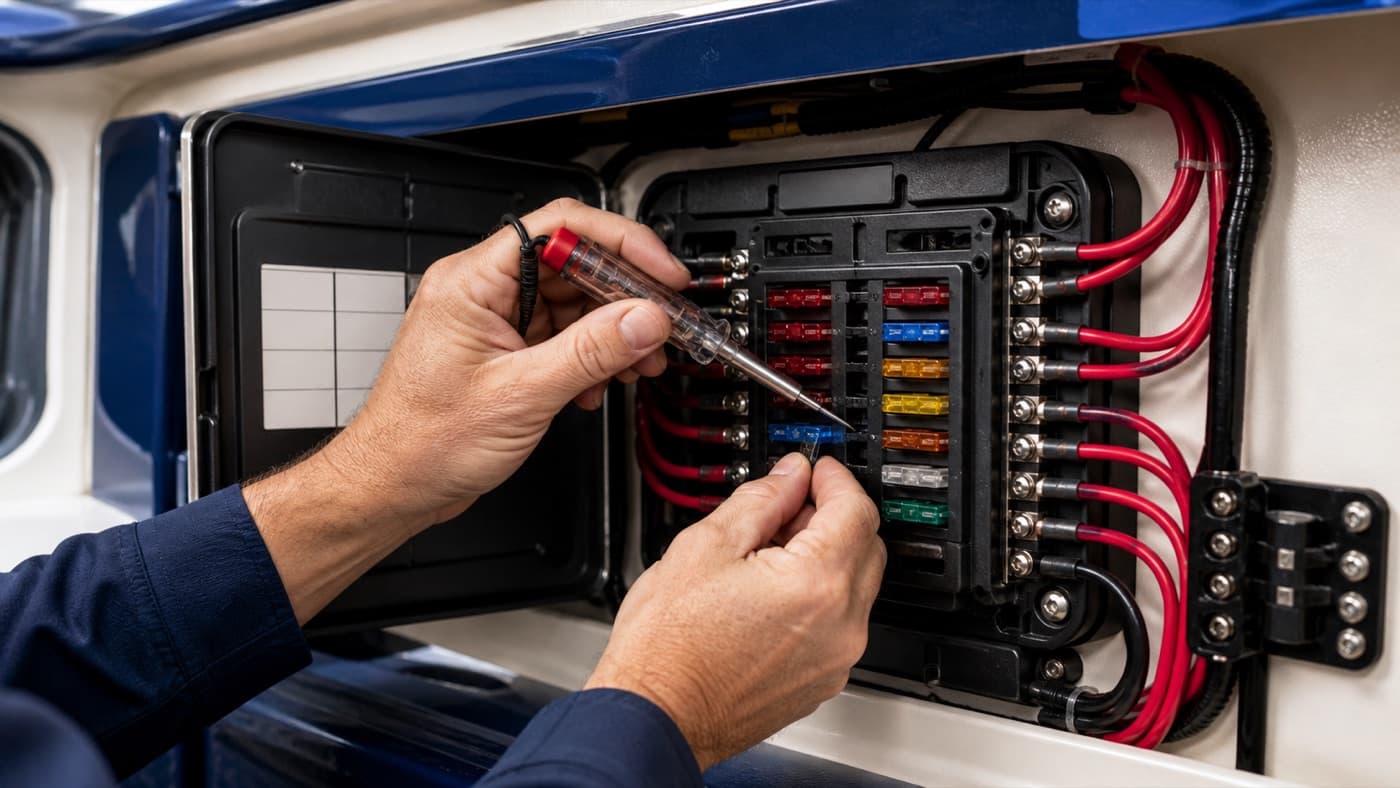
For a dead 12-volt device, confirm the correct switch position, inspect the labeled fuse or breaker, look for loose or corroded connections, and record what else stopped working. Stop if wiring is hot, damaged, wet, smoking, or repeatedly blowing protection.
Define the boundaries
This guide is limited to observation and basic 12-volt checks. Shore-power AC, inverter output, generator circuits, large lithium systems, damaged batteries, and unfamiliar high-current equipment require qualified help. Turn off power before touching connections.
Follow the circuit logically
Use the equipment manual and labeled panel. Confirm the master and branch switches, inspect the correct fuse or breaker, and look for a disconnected plug or obvious corrosion. If protection trips again, do not keep resetting it; the circuit may have a short or overloaded device.
- What stopped working?
- What still works on the same panel?
- Did the failure follow rain, service, or vibration?
- Is there heat, odor, discoloration, or water?
- Does moving a cable change the symptom?
Provide useful observations
A photo of the equipment label, battery configuration, panel labeling, and the exact failure sequence can reduce diagnostic time. Never substitute a larger fuse, bridge a breaker, or use unprotected temporary wiring.
Know when the first check should end
Stop when protection trips repeatedly, a conductor becomes warm, insulation is damaged, a battery is swollen or leaking, or the circuit does not match its labels. Those conditions require diagnosis, not another reset or a larger fuse.
Before requesting service, photograph labels and connections without moving them, list the equipment that works and does not, and note recent rain, washing, battery work, or accessory installation. Do not disconnect multiple wires at once unless they are clearly identified and the system is safely isolated.
- Never bypass a fuse or breaker
- Stay out of shore-power and inverter AC circuits
- Remove jewelry around batteries
- Treat heat, smoke, odor, and swelling as stop conditions