 Otter Marine
Common Causes of Corroded Boat Wiring
Why marine wiring corrodes, where damage hides, and what separates a lasting repair from a temporary connection.
By Otter Marine Published August 12, 2026
The short answer
Boat wiring corrodes when moisture and salt reach conductors or terminals, especially where seals, insulation, crimps, or cable support have failed. Heat and high resistance then accelerate the damage.
Where corrosion starts
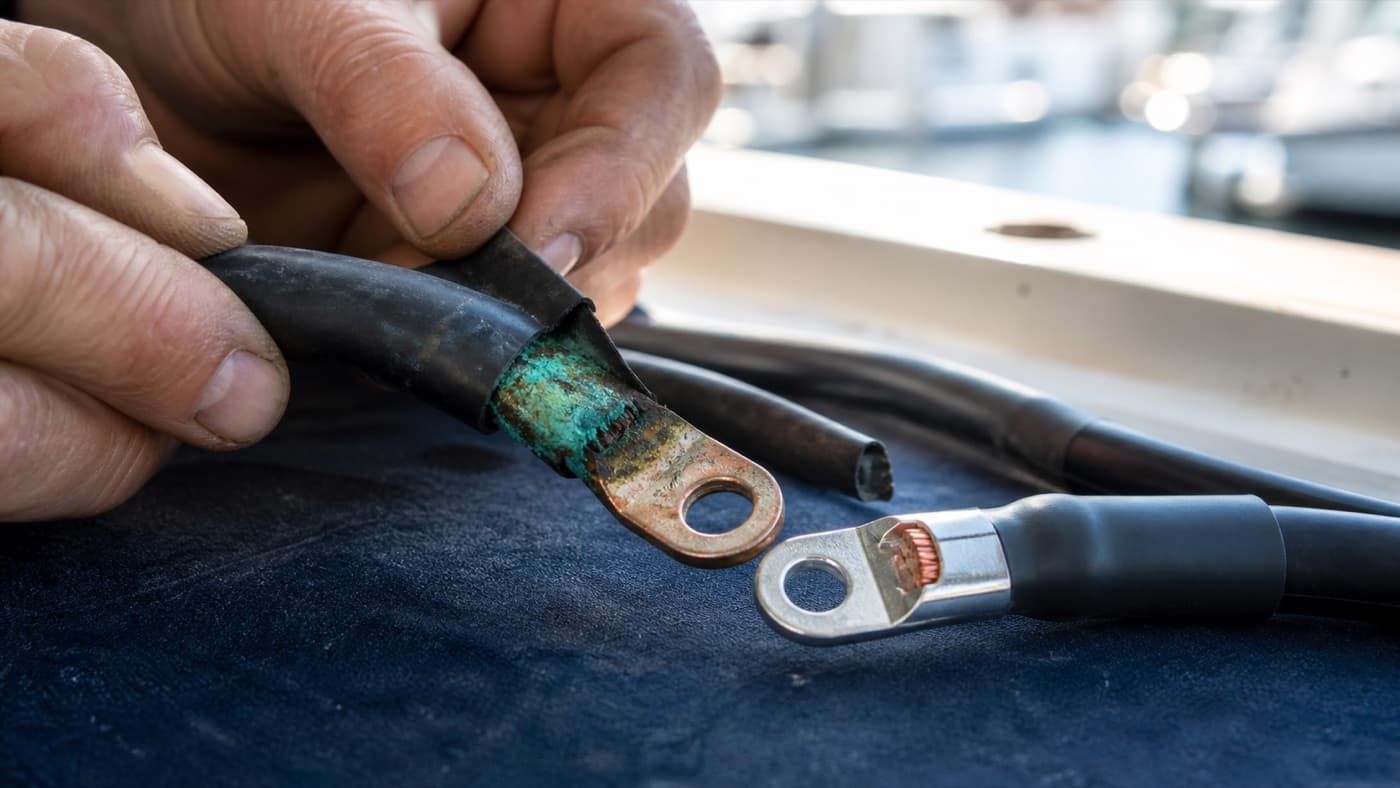
Common entry points include open-ended wire, poorly sealed crimps, damaged insulation, unsupported cable flexing, loose terminals, unprotected grounds, and water tracking through a harness. A terminal can look clean on the outside while corrosion advances under insulation.
Warning signs
Green or white deposits are obvious, but intermittent equipment, dim lights, hot terminals, voltage that changes with movement, swollen insulation, brittle conductors, and repeated fuse problems also deserve investigation.
- Battery cables and engine grounds
- Bilge and pump wiring
- Harness plugs in wet locations
- Switch panels and fuse blocks
- Trailer connectors and exposed accessories
A durable repair
A lasting repair removes damaged conductor back to clean material, uses correctly sized marine components and tools, seals the connection appropriately, supports the cable, and corrects the source of moisture or strain. Twisting wires together or covering corrosion with tape only hides resistance.
Prevent the same failure from returning
Replacing a terminal is only half the repair if water still runs down the cable, the connection remains unsupported, or the enclosure cannot drain. Route and secure wiring to reduce movement, maintain drip loops where appropriate, and restore covers, boots, and seals designed for the location.
After repair, test the circuit under its normal load and measure voltage drop across the repaired path. Label undocumented wiring and update the vessel diagram when practical. Clear records make later electrical work safer and reduce time spent tracing old modifications.
- Remove corrosion back to clean conductor
- Use marine-rated wire and terminals
- Crimp with the correct tool
- Seal, support, label, and load-test the repair