 Otter Marine
Why Does My Boat Battery Keep Dying?
How to distinguish an aging battery from a charging problem, parasitic draw, or poor connection.
By Otter Marine Published August 12, 2026
The short answer
A repeatedly dead boat battery usually has one of four problems: the battery cannot hold capacity, it is not being fully charged, an unwanted load is draining it, or resistance in the cables and connections prevents proper starting or charging.
A voltage reading is only the beginning
A battery can show an acceptable resting voltage and still collapse when the starter demands current. Capacity and load testing matter. Battery age, chemistry, installation, charging profile, heat, and how deeply it has been discharged all affect the result.
Clean-looking connections can also hide resistance between a terminal and cable lug. Heat, discoloration, corrosion, or a voltage drop under load points toward the circuit rather than the battery alone.
Look at when it goes dead
The timing narrows the search. A battery dead after sitting suggests storage practices, an aging battery, or a parasitic load. A battery that weakens while underway suggests a charging-system problem. A sudden failure only during cranking can indicate poor cables, a switch, solenoid, starter, or battery capacity issue.
Test the system, not just the battery
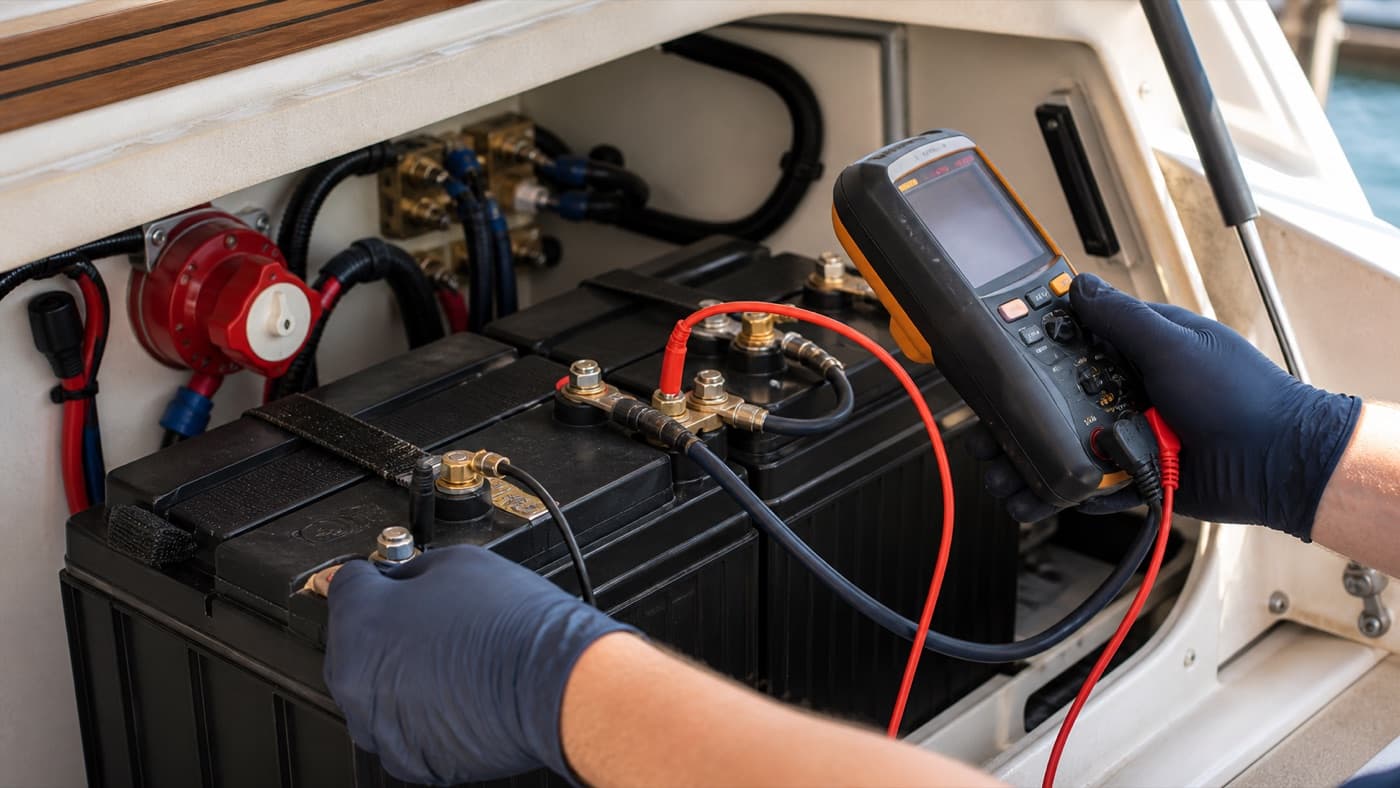
A proper diagnosis checks battery condition, charging output, cable voltage drop, grounds, battery switches, charger operation, and unwanted current draw. Multi-bank systems also need to be checked for incorrect switching or isolation behavior.
Do not bypass fuses, create sparks around batteries, or work on shore-power AC unless you are qualified. Battery gases, high current, and incorrect charger settings can create serious hazards.
A repeatable way to track the drain
Record battery voltage only after the battery has rested, then note what happens after charging, overnight storage, and normal operation. List equipment that remains powered when the main switches are off, including automatic bilge pumps, alarms, stereo memory, chargers, and networked electronics.
A battery that repeatedly goes flat may already be damaged even after the original drain is repaired. The final check should cover battery capacity, charging performance, cable voltage drop, and unintended current draw so one weak part does not hide another.
- Battery age and type
- Charger model and indicator state
- Switch positions while stored
- Time required for the battery to go flat