 Otter Marine
How Year-Round Slip Storage Affects Boats in Los Angeles
What constant saltwater exposure, shore power, marine growth, corrosion, moisture, and low-use periods mean for boats kept in Los Angeles-area marinas.
By Otter Marine Published August 13, 2026
The short answer
A boat in a Los Angeles slip is continuously exposed even when it is not operating. Salt, moisture, galvanic activity, marine growth, shore power, battery charging, dock movement, and small leaks continue between visits. A low-hour engine therefore still needs time-based maintenance and the vessel needs frequent condition checks.
Storage in the water is active exposure
A slip is convenient, but it is not the same as dry storage. Underwater metals remain immersed, the hull and running gear collect growth, dock lines work against cleats, shore power stays connected on many boats, and salt air reaches machinery and electrical connections. Low engine hours do not stop these processes.
Create a recurring inspection rhythm based on the specific marina, boat, and systems. A simple monthly visit can reveal a changed bilge level, exhausted anode, hot shore-power connection, weak battery, chafed line, salt trail, or small fuel or coolant seep before it becomes a larger repair.
Corrosion is an electrical and mechanical problem
Salt and moisture increase corrosion at battery terminals, grounds, connectors, fuse blocks, engine hardware, mounts, hose clamps, steering components, and dissimilar-metal joints. Corrosion increases resistance, and resistance produces heat and voltage loss. A connection can look acceptable outside while conductor strands degrade beneath insulation.
Inspect for green copper, white aluminum oxide, rust bleed, swelling, heat discoloration, looseness, and damaged seals. A durable repair removes damaged material, uses appropriate marine components and tools, restores support and sealing, and corrects the moisture or strain that caused the failure.
Anodes and underwater condition affect more than appearance
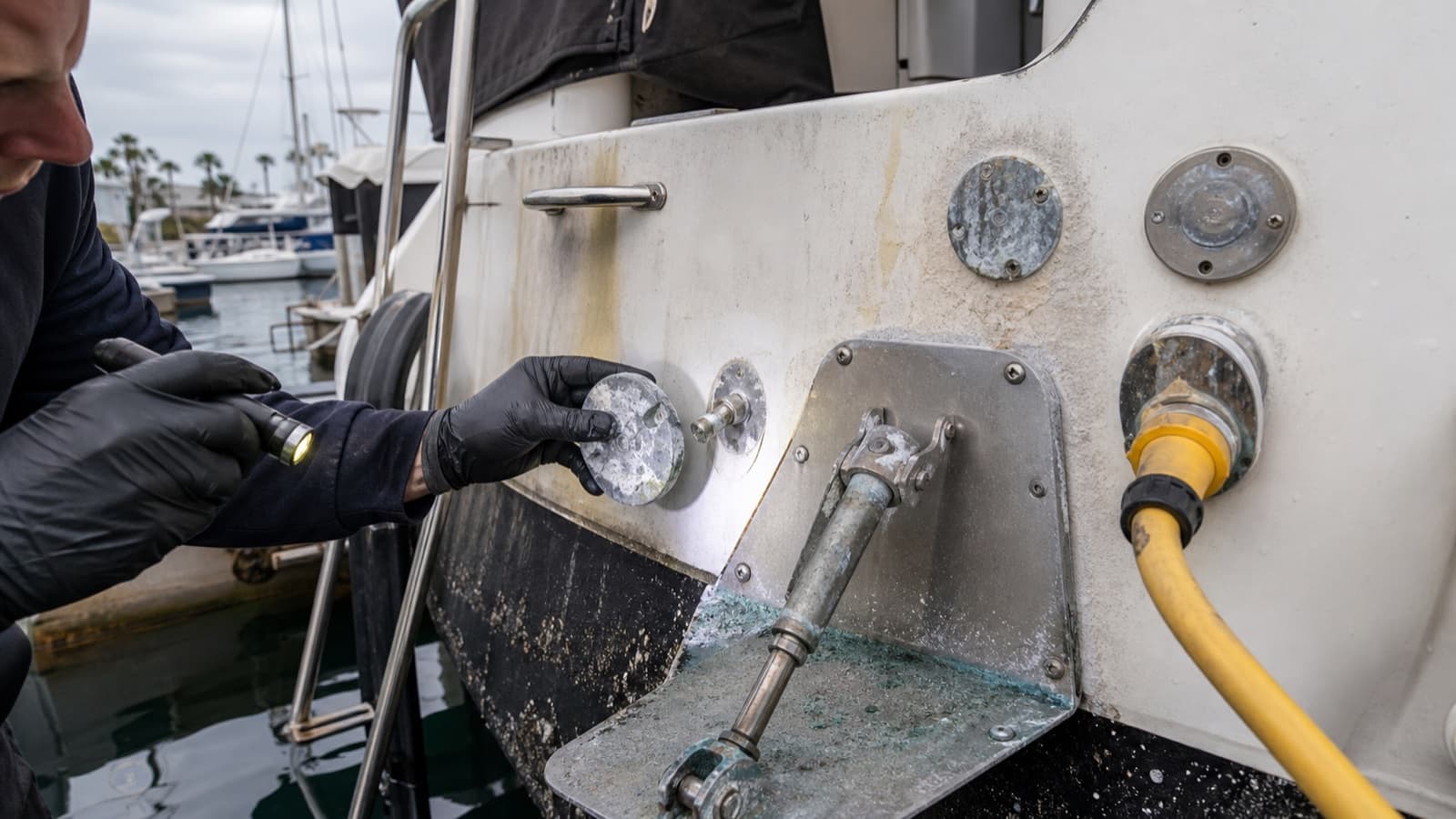
Sacrificial anodes protect selected underwater metals only when the material, placement, electrical connection, and remaining mass are correct for the installation. Inspect them at an interval appropriate to the boat and marina rather than waiting for an annual guess. Unusual rapid loss deserves investigation.
Marine growth on the hull, propeller, intakes, and running gear adds drag and can restrict cooling or create vibration. A heavily fouled boat may not reach normal RPM or speed even when the engine is healthy. Coordinate qualified underwater inspection and cleaning under applicable environmental rules.
Shore power and batteries need observation
A connected charger can fail, a battery can lose capacity, and a shore-power cord or inlet can loosen or overheat. Inspect cords, plugs, inlets, breakers, charger indications, battery cases, restraints, ventilation, and terminals. Do not handle wet, scorched, melted, or arcing equipment; isolate it only if safe and obtain qualified help.
Know which loads remain active when the main switches are off. Bilge pumps, alarms, monitoring equipment, refrigeration, and stereo memory can affect stored energy. Test battery capacity and charging periodically rather than assuming the presence of a charger guarantees readiness.
Moisture and small leaks continue between visits
Rain, wash water, shaft seals, stuffing boxes, cooling hoses, freshwater plumbing, air-conditioning drains, and deck leaks can all add water. Inspect the bilge directly and test pumps and float switches by an approved method. A pump cycling more often is a symptom, not a repair.
Ventilate machinery and cabin spaces appropriately and correct water entry. Moisture trapped under covers or behind panels supports corrosion and mold and can track along cables into electrical equipment. Photographs from the same inspection points make gradual change easier to detect.
Time-based maintenance still applies
Oil, coolant, fuel, impellers, seals, belts, hoses, batteries, and corrosion protection age even when the engine does not reach its hour interval. Follow the manufacturer's whichever-comes-first language and adjust for storage, salt exposure, fuel age, and known condition.
Run the boat regularly only when it can be operated properly and safely; a short unloaded idle may add moisture without proving reliability. When returning after a long idle period, inspect and recommission systems before using the boat for a demanding trip.