 Otter Marine
Saltwater Boat Maintenance: What Corrosion Changes
A practical saltwater-maintenance routine for engines, electrical systems, hardware, cooling passages, and records.
By Otter Marine Published August 12, 2026
The short answer
Saltwater accelerates corrosion and leaves deposits wherever moisture remains. Consistent rinsing, flushing where specified, anode inspection, electrical protection, and early attention to small leaks matter more than occasional aggressive cleaning.
Remove salt without driving it deeper
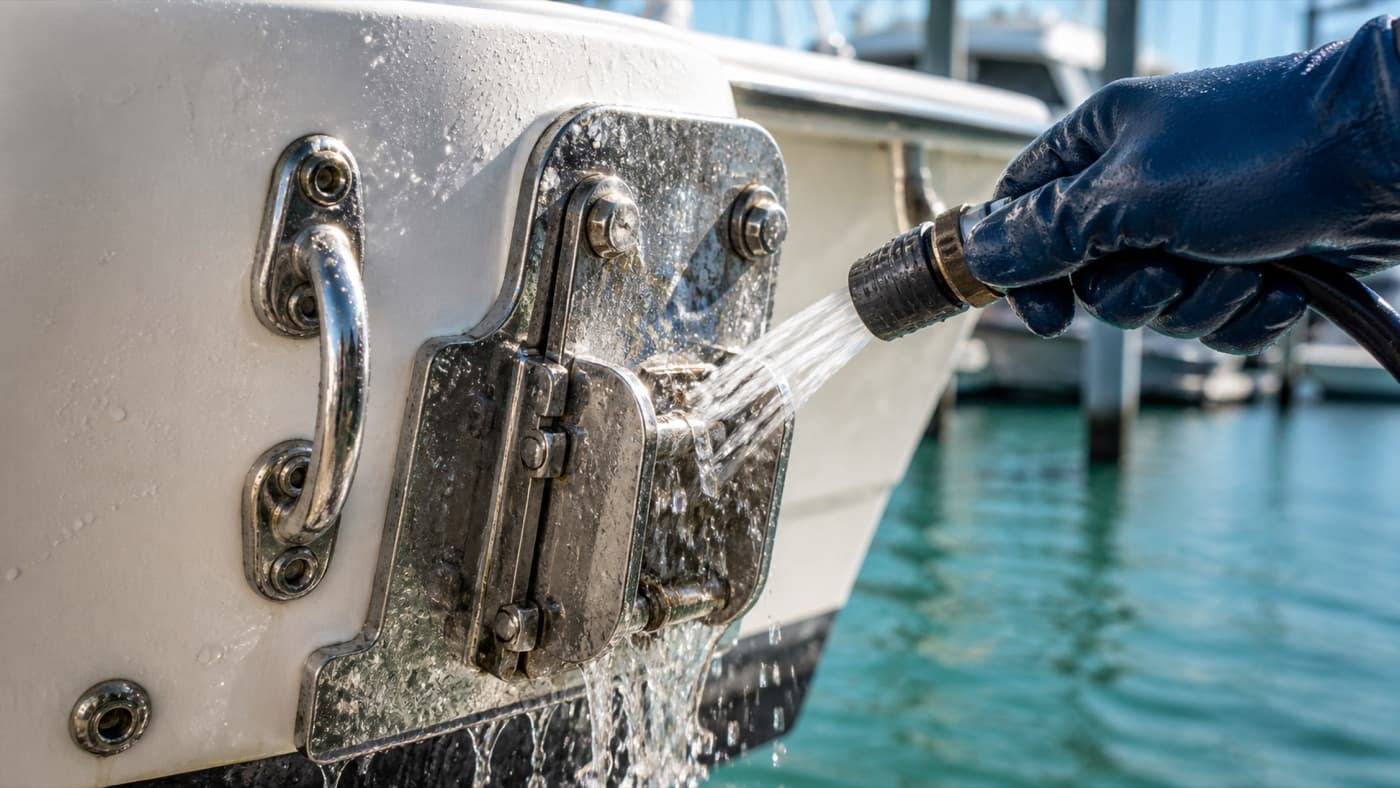
Rinse exposed engine surfaces and hardware with fresh water after use, following product and manufacturer directions. Avoid forcing high-pressure water into connectors, seals, vents, or intake openings. Let compartments dry and maintain ventilation.
Watch electrical connections and dissimilar metals
Corrosion can grow inside cable lugs, under heat-shrink, behind grounds, and between dissimilar metals. Inspect for green deposits, white powder, swelling, heat discoloration, loose hardware, and damaged protective coatings.
- Battery terminals and grounds
- Engine harness connectors
- Anodes and bonding points
- Steering and mounting hardware
- Fuel, cooling, and exhaust clamps
Use a schedule based on exposure
A boat kept in the water year-round has different needs from a trailered boat flushed after every outing. Record where the boat lives, how often it runs, and any shallow or debris-heavy operation so service intervals can reflect the real environment.
Build a routine around where the boat lives
A slip-kept boat needs regular attention to anodes, bonding, underwater metals, shore-power conditions, and moisture in machinery spaces. A trailered boat adds flushing, trailer hubs, brakes, lights, and the risk of salt drying inside passages between outings.
Inspect the same high-risk points often enough to notice change: battery terminals, engine grounds, hose clamps, mounting hardware, steering parts, and areas where water collects. Photographs and dated notes make slow corrosion easier to spot before it becomes structural or electrical damage.
- Rinse without forcing water into connectors
- Keep compartments ventilated and dry
- Inspect anodes before they are exhausted
- Correct leaks that repeatedly wet wiring or hardware