 Otter Marine
Boat Battery or Alternator? How to Recognize the Difference
A symptom-based guide to battery capacity, charging output, cables, and why one voltage reading rarely settles the question.
By Otter Marine Published August 12, 2026
The short answer
A weak battery often fails after sitting or under cranking load. A charging fault often shows up as voltage that never recovers while the engine runs. Cable resistance, switches, isolators, and chargers can imitate either problem, so the full circuit must be tested.
Battery symptoms
A battery may charge normally but have too little usable capacity. Slow cranking after a full charge, rapid voltage collapse under load, swelling, leakage, age, or repeated deep discharge all justify proper inspection and load or capacity testing.
Charging-system symptoms
If the battery starts the engine but becomes progressively weaker during operation, look at alternator output, belt condition where applicable, regulators, charging cables, grounds, fuses, and distribution equipment. Dash gauges are helpful trends but not a substitute for measurements at the relevant points.
Why the answer can be both
A failed charging system can damage or repeatedly discharge a battery, and a failing battery can overload charging components. Confirm battery health, measure output under the correct operating conditions, and perform voltage-drop tests before choosing which component to replace.
Measurements that distinguish the systems
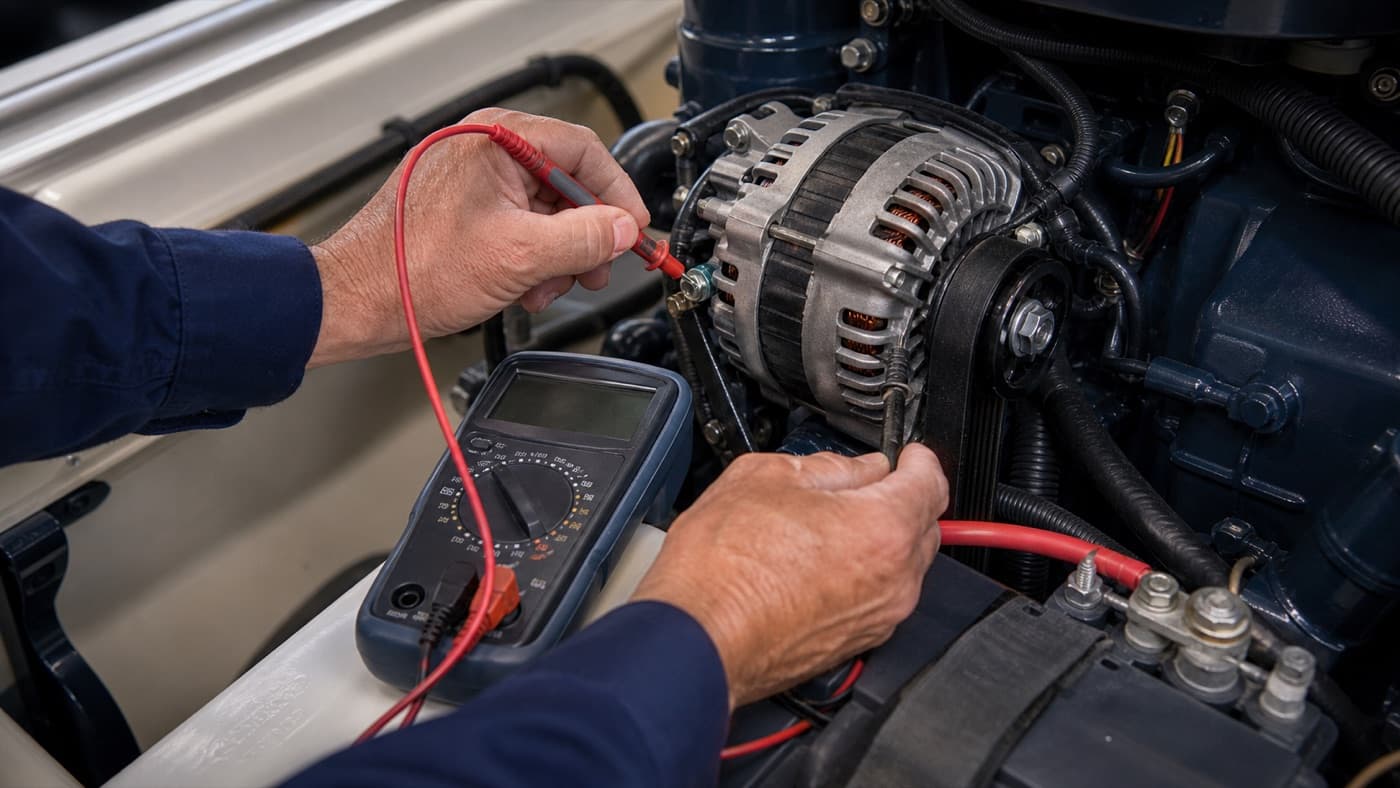
Battery state of charge, resting voltage, and a load or capacity test describe the battery. Charging voltage and current under specified engine conditions describe the alternator and regulator. Voltage-drop tests show whether cables, grounds, switches, or protection devices are preventing power from reaching either system.
Take readings at the component being evaluated, not only at a convenient dashboard display. Results also need context: battery chemistry, temperature, recent charging, engine RPM, electrical loads, and the charging design can all change what a normal number looks like.
- Test the battery after a proper charge
- Inspect belt condition and tension where fitted
- Measure both positive and ground paths under load
- Verify output with normal onboard loads operating