 Otter Marine
Which Boat Repairs Can Be Done at the Slip?
A practical guide to dockside mechanical work, marina restrictions, safe access, and repairs that require haul-out.
By Otter Marine Published August 12, 2026
The short answer
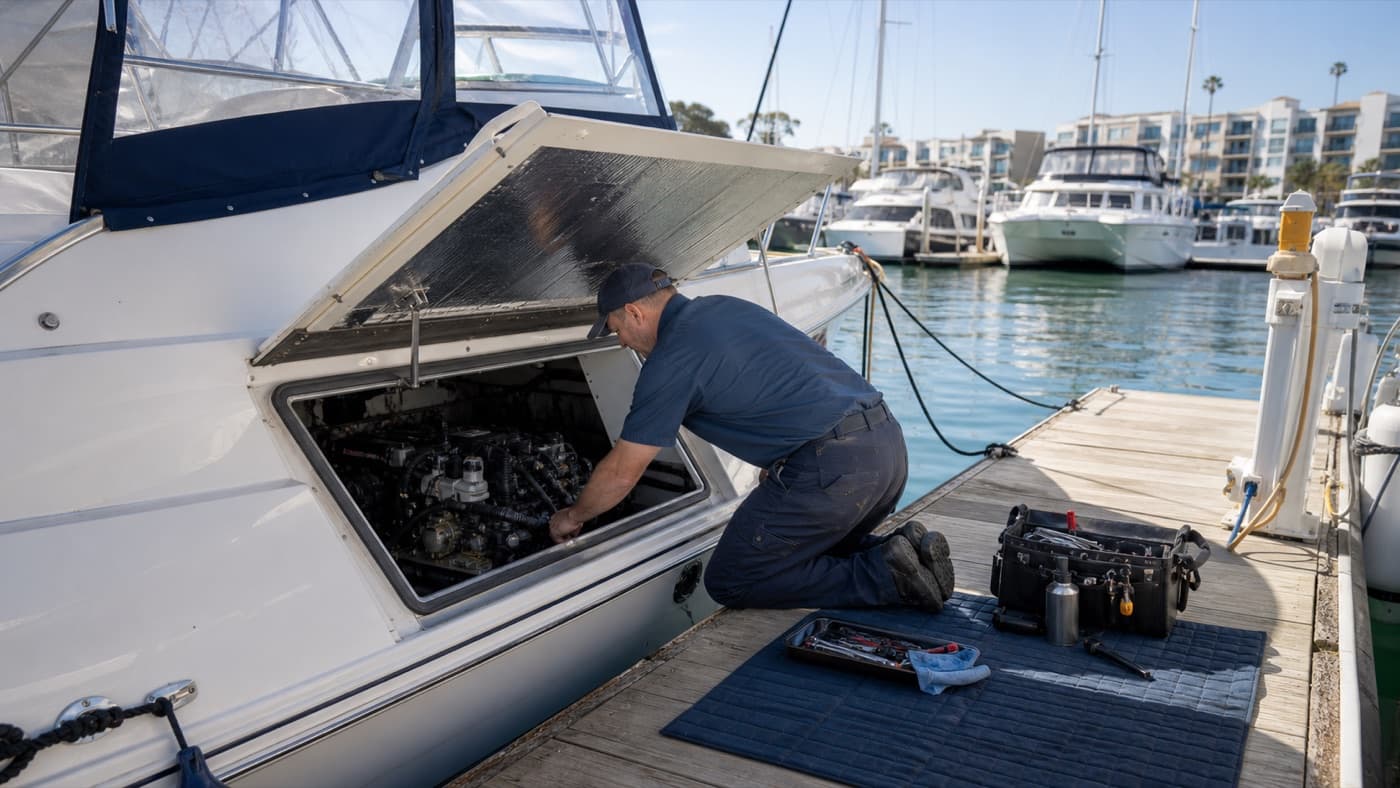
Many accessible engine, cooling, fuel, starting, charging, maintenance, control, and 12-volt repairs can be completed at the slip. Work involving the hull below the waterline, heavy lifting, major spills, structural repair, or prohibited operations usually requires a yard.
Common dockside work
Oil and filter changes, diagnostics, battery and charging tests, accessible wiring repairs, tune-ups, hose and belt replacement, fuel filtration, controls, many water-pump jobs, and some component replacements are often possible without moving the boat.
The marina and the job both set limits
Marinas may restrict fluid handling, noise, engine testing, contractor access, parking, work hours, or specific repair categories. The mechanic also needs stable access, ventilation, lighting, spill control, and enough space to remove components safely.
- Confirm gate and dock access
- Tell the marina when outside contractors are required to register
- Provide shore-power and battery information
- Clear the engine area before arrival
- Share any known leaks, fuel odors, or access hazards
When a haul-out becomes necessary
Underwater gear, through-hulls, bottom coatings, some sterndrive work, major structural issues, and repairs requiring lifting or controlled shop equipment may need a yard. A dockside inspection can often define the scope before the boat is scheduled for haul-out.
Make the dockside visit productive
Before the appointment, confirm contractor access with the marina, share the gate and parking procedure, clear gear from the engine space, and send photographs of access points. Tell the mechanic about fuel odors, active leaks, failed bilge equipment, or unstable boarding conditions before arrival.
Plan how the repair will be verified. Some work can be tested securely at idle, while performance complaints may need an authorized sea trial. If the next step requires haul-out or shop equipment, a clear dockside diagnosis should identify the component, evidence, and recommended facility capability.
- Confirm marina permission and work hours
- Provide safe, clear access
- Disclose hazards before the visit
- Agree on the test or closeout procedure