 Otter Marine
What to Ask Before Hiring a Marine Mechanic
Questions that clarify experience, scope, authorization, rates, parts, communication, and the final service record.
By Otter Marine Published August 12, 2026
The short answer
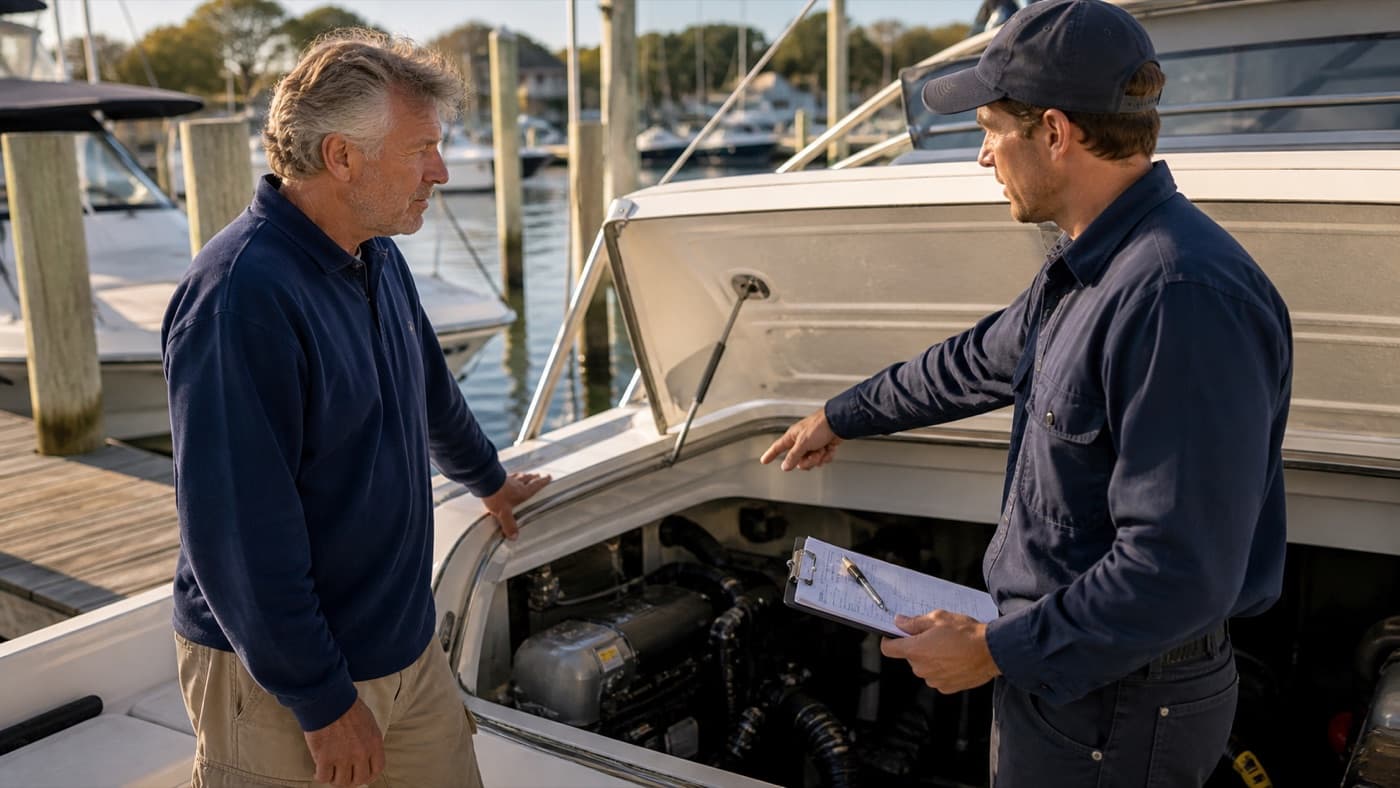
Ask whether the mechanic works on your propulsion type, how diagnosis is authorized, which labor rate and minimum apply, how additional work is approved, what documentation you receive, and whether the job can be completed safely at your location.
Before booking
Provide the engine model, serial number, boat location, access details, and a precise symptom. Ask whether the provider regularly works on that engine type and whether specialized software, tooling, yard access, or another trade may be required.
- What is the service-call or labor minimum?
- Which rate applies to diagnosis and repair?
- How are parts and outside services handled?
- Will I approve work beyond the initial scope?
- What warranty terms apply to the completed work?
During diagnosis
A professional should be able to explain what has been confirmed, what remains uncertain, and which next test is justified. Diagnosis is a process; an immediate confident parts list without testing deserves questions.
At closeout
Request an itemized record of labor and parts, the fault found, work completed, remaining recommendations, and any operating or follow-up instructions. Keep that information with the vessel's maintenance history.
How to compare estimates fairly
Confirm whether an estimate covers diagnosis, repair labor, travel, parts sourcing, shop supplies, outside services, and testing. A lower initial number may describe a narrower scope, while a diagnostic authorization may intentionally stop once the fault and repair plan are known.
Ask how discoveries are communicated and what requires approval. The strongest comparison is not only price; it is whether the provider understands the engine, defines the work clearly, tests before replacing parts, and leaves a useful record of findings and completed work.
- Compare the same scope and assumptions
- Clarify minimums, travel, and parts handling
- Require approval for added work
- Ask how the repair will be verified