 Otter Marine
Annual Boat Service: What Owners Should Expect
How to prepare for annual engine service and understand the inspection, maintenance, recommendations, and records afterward.
By Otter Marine Published August 12, 2026
The short answer
Annual service should reconcile the boat's actual engine hours and history with the manufacturer's schedule, complete the work due, inspect related systems, and leave the owner with a clear record and prioritized recommendations.
Before the appointment
Gather the model and serial numbers, engine hours, prior invoices, known symptoms, and any parts already carried aboard. Tell the technician about hard starts, alarms, leaks, unusual sounds, or changes under load even if they seem intermittent.
During the service
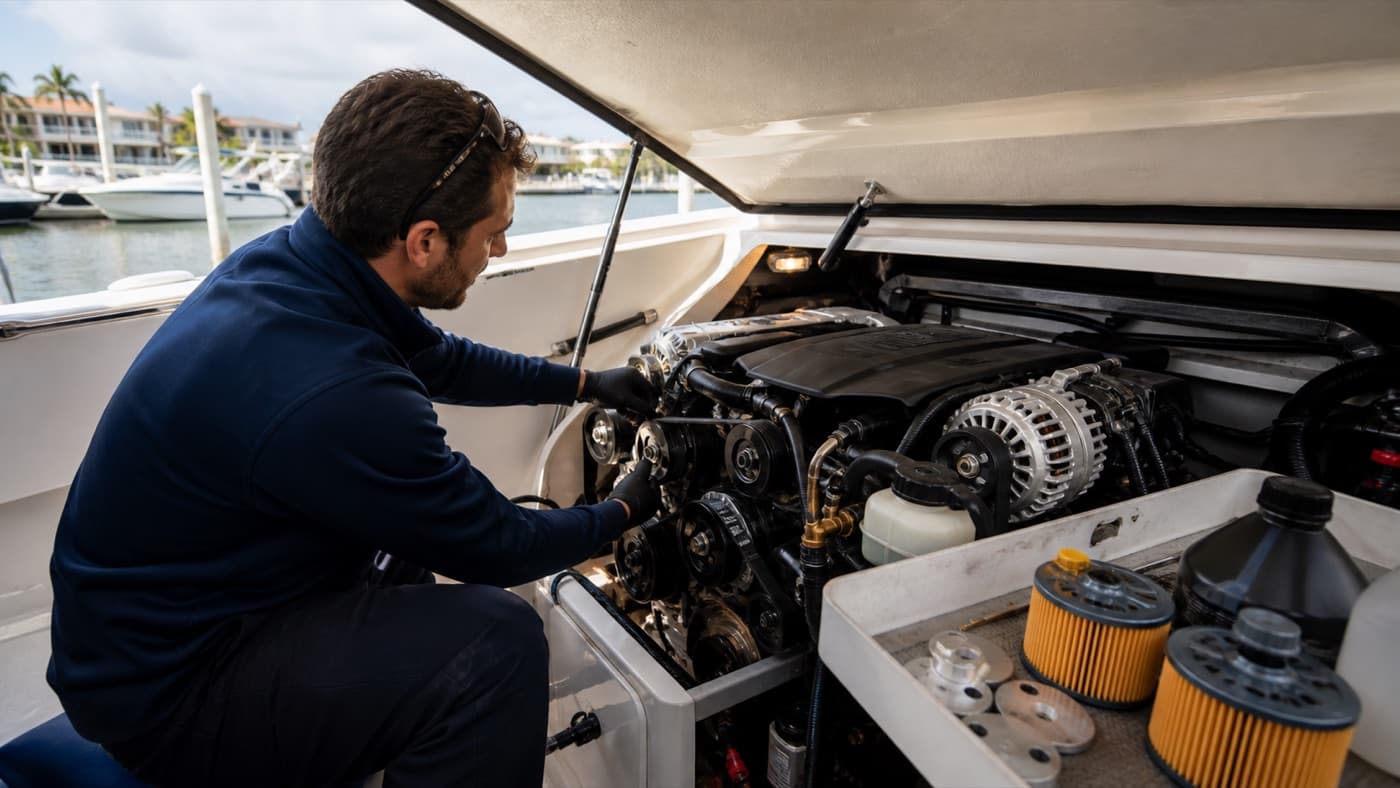
The scope depends on the engine and drive. It may include fluids, filters, ignition items, fuel-system checks, cooling-system service, belts, hoses, anodes, propeller removal, lubrication, battery testing, steering inspection, and a controlled run test.
- Work due now under the official schedule
- Condition-based findings that need approval
- Items to monitor
- The next date or engine-hour milestone
Afterward
A good closeout separates completed work from recommendations and explains why any additional repair matters. Keep the itemized record with the boat. The history becomes more valuable over time because it reveals repeated faults, true maintenance intervals, and evidence of consistent ownership.
Prioritize findings instead of treating every note equally
The closeout should distinguish safety concerns, items that can cause near-term damage, scheduled maintenance, and observations that can be monitored. Ask what evidence supports each recommendation and what could happen if the work is deferred.
Use that priority list to schedule the next visit before a small leak, weak battery, worn belt, or restricted cooling component becomes a breakdown. A good annual service creates a usable plan for the coming year, not simply a list of parts replaced that day.
- Address safety and active leaks first
- Correct issues that threaten engine damage
- Schedule due maintenance
- Track lower-priority condition items