 Otter Marine
How Often Should a Boat Impeller Be Replaced?
Why impeller intervals depend on the engine, time, hours, water conditions, and any history of running dry.
By Otter Marine Published August 12, 2026
The short answer
Use the engine manufacturer's interval and shorten it when the pump has run dry, ingested debris, sat for long periods, or operated in sand or shallow water. Many schedules call for regular inspection and periodic replacement based on time or engine hours.
Rubber ages even when the boat sits
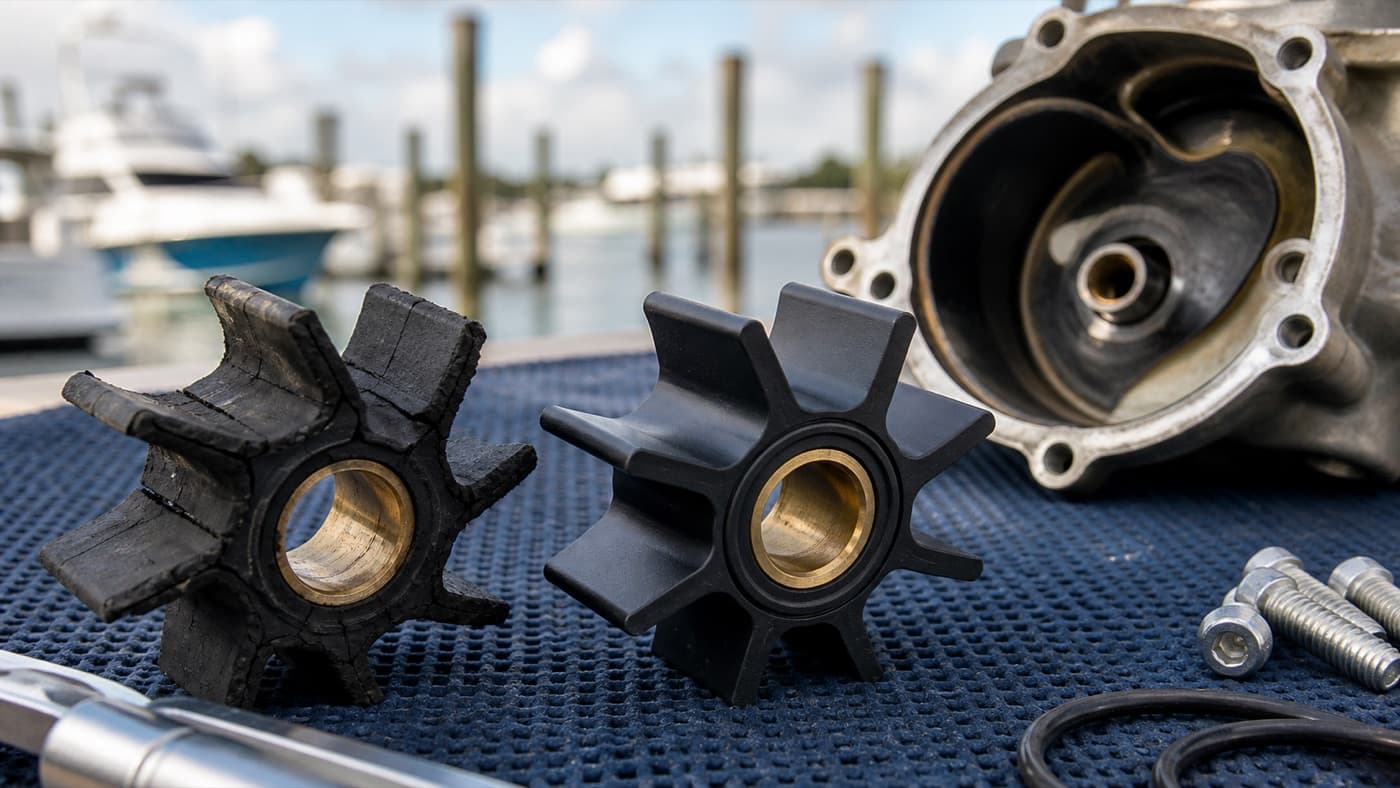
Flexible impeller vanes bend every time the pump turns and can take a permanent set while parked. Heat, age, contaminated water, dry running, and a scored housing all reduce pumping performance. Low engine hours do not automatically mean the impeller is healthy.
Replace the right amount of the pump
Sometimes an impeller is the only worn item. In other cases, the housing, cup, wear plate, key, seals, or gaskets also need attention. Installing fresh rubber in a deeply scored pump may not restore the intended flow.
If a vane is missing, it should be found. Pieces can travel through the cooling circuit and restrict passages downstream.
Signs that should move service forward
Do not wait for the calendar interval if cooling behavior changes.
- A weak or inconsistent telltale
- An overheat alarm
- Known dry running
- Recent operation in sand, silt, or debris
- Cracked, stiff, or permanently bent vanes found during inspection
Operating conditions that shorten impeller life
Sand, silt, weeds, shallow-water operation, long dry storage, and accidental dry running can damage an impeller before the normal service interval. A pump housing that is scored or distorted can also reduce performance even when a new impeller is installed.
Keep the old part until every vane is accounted for. Missing pieces may remain in downstream passages and restrict flow. The service record should include the date, hours, observed condition, and any housing, seal, or thermostat work completed at the same time.
- Follow the exact engine schedule
- Inspect sooner after dry running
- Account for every missing vane
- Confirm cooling performance after service