 Otter Marine
What Is Included in a Pre-Purchase Engine Inspection?
What an engine-focused inspection can reveal, what it cannot guarantee, and when a full marine survey is also needed.
By Otter Marine Published August 12, 2026
The short answer
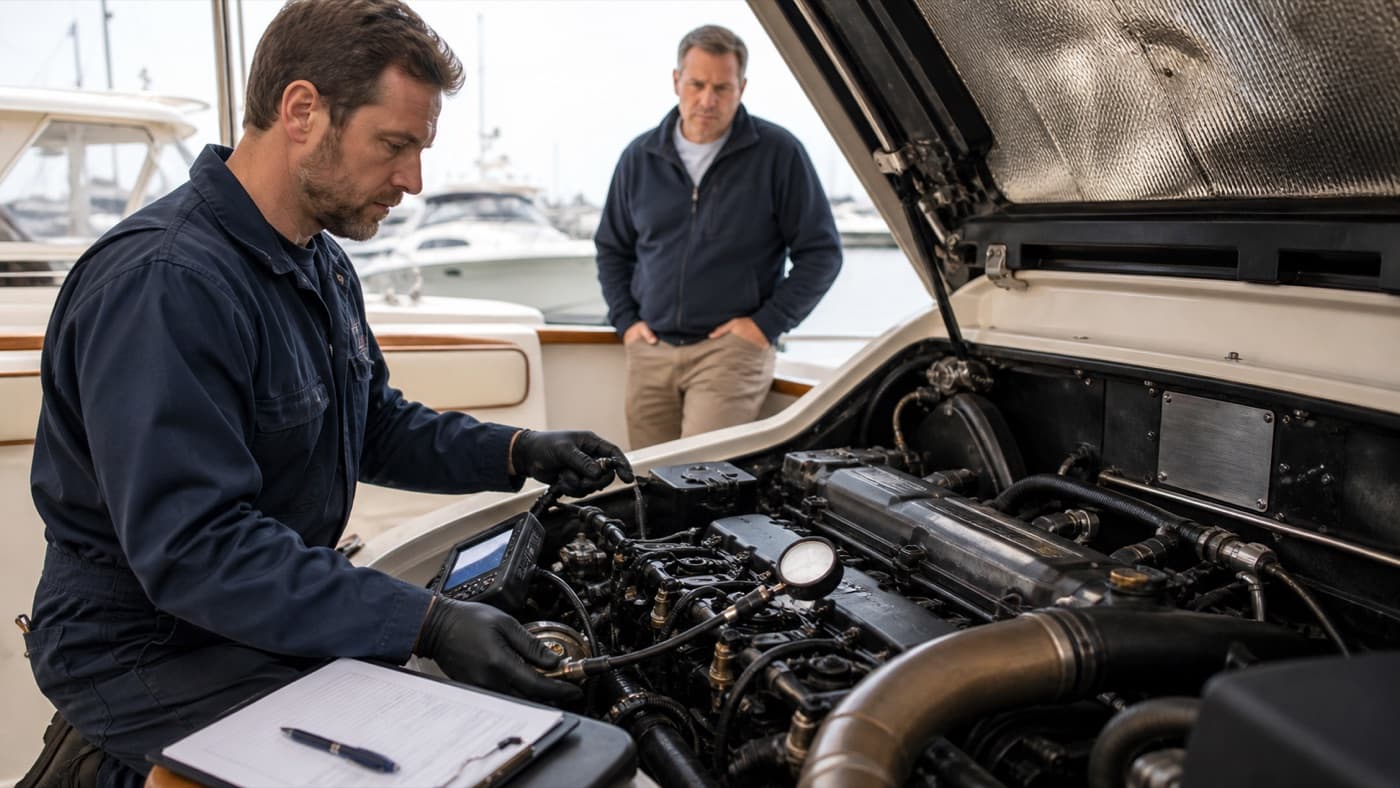
An engine inspection reviews identity, condition, fluids, cooling, fuel, electrical, starting, running behavior, service history, and available diagnostic information. Scope varies, and it does not replace a full hull and systems survey.
Confirm the scope before the visit
An engine check may be visual and dockside, or it may include compression, electronic scan data, oil sampling, and a sea trial when appropriate and authorized. Access, engine temperature, seller permission, and haul-out status affect what can be tested.
Common inspection areas
The inspector should verify model and serial information, look for leaks and corrosion, inspect fluids and service items, observe cold starting where possible, monitor charging and cooling behavior, and note abnormal smoke, sound, vibration, or control operation.
- Service records and engine hours
- Fault history and available scan data
- Fuel, cooling, exhaust, and electrical condition
- Mounts, controls, steering, and visible driveline items
- Running observations at dock and under load when included
Understand the limits
An inspection describes accessible condition on that day; it cannot guarantee remaining life or reveal every hidden defect. A qualified marine surveyor should evaluate the hull, structure, safety systems, and broader vessel. Written findings help the buyer decide whether to proceed, negotiate, or request deeper testing.
Prepare the boat for a meaningful inspection
Request access to a genuinely cold engine when cold-start behavior is part of the scope, and arrange permission for scan tools, fluid sampling, compression testing, or a sea trial before the appointment. Make service records, keys, battery power, fuel, and cooling water available.
If a seller declines a test or access prevents inspection, the written report should say so. Buyers can then treat the missing information as uncertainty rather than assuming an untested component is sound. Coordinate the engine inspection with the survey and haul-out so findings can inform one another.
- Verify what testing is authorized
- Provide records and engine identification
- Arrange a cold start when included
- Document every inaccessible or untested item