 Otter Marine
Inboard vs. Outboard Maintenance: What Actually Changes?
A practical comparison of access, cooling, driveline, fuel, corrosion, and routine service for inboard and outboard boats.
By Otter Marine Published August 12, 2026
The short answer
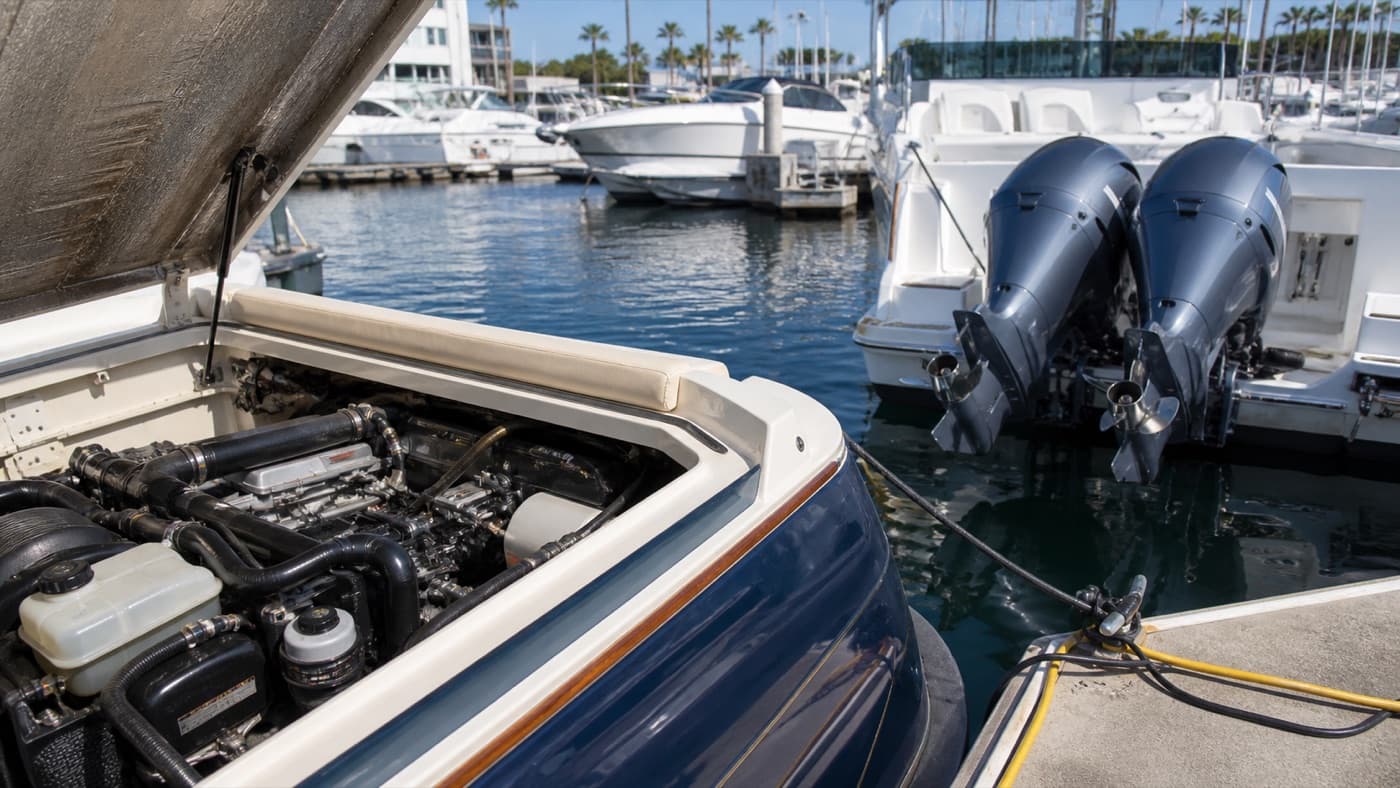
Both engine types need disciplined fluid, fuel, cooling, electrical, and corrosion care. Outboards combine the engine and gearcase at the transom; inboards add engine-room access, a separate driveline, and often more vessel systems around the engine.
Outboard maintenance
Routine outboard work commonly includes powerhead oil on four-strokes, gearcase lubricant, fuel filtration, spark plugs, lubrication points, anodes, propeller inspection, steering, and the water pump. Tilting the engine clear of saltwater can help, but external exposure also makes corrosion control important.
Inboard maintenance
Inboards may use raw-water or closed cooling and can add heat exchangers, sea strainers, shaft systems, exhaust components, belts, and tight engine-room access. Gasoline and diesel engines have different ignition, fuel, ventilation, and service requirements.
Choose based on the actual boat
Neither layout is automatically low-maintenance. Access, hours, saltwater exposure, previous care, parts availability, and the specific installation matter more than the label. Before buying, inspect the complete propulsion system and review records rather than comparing engines only by advertised service intervals.
Compare the complete propulsion installation
Ownership cost depends on more than the engine itself. For an outboard, include steering, trim, mounting hardware, rigging, controls, and the gearcase. For an inboard, include seawater plumbing, exhaust, mounts, shaft or drive components, ventilation, and access around the engine.
Before choosing a boat, locate routine service points and imagine reaching them with normal tools. A sound engine in a difficult installation can require more labor than a comparable engine with clear access, and neglected surrounding systems can create failures that look like engine problems.
- Access to filters, belts, plugs, and pumps
- Corrosion around mounts and rigging
- Condition of cooling and exhaust components
- Availability of records and model-specific support