 Otter Marine
New Boat Owner's Guide to Marina del Rey
A practical first-year guide to Marina del Rey basins, marina rules, maintenance, engine records, service providers, and trip readiness.
By Otter Marine Published August 13, 2026
The short answer
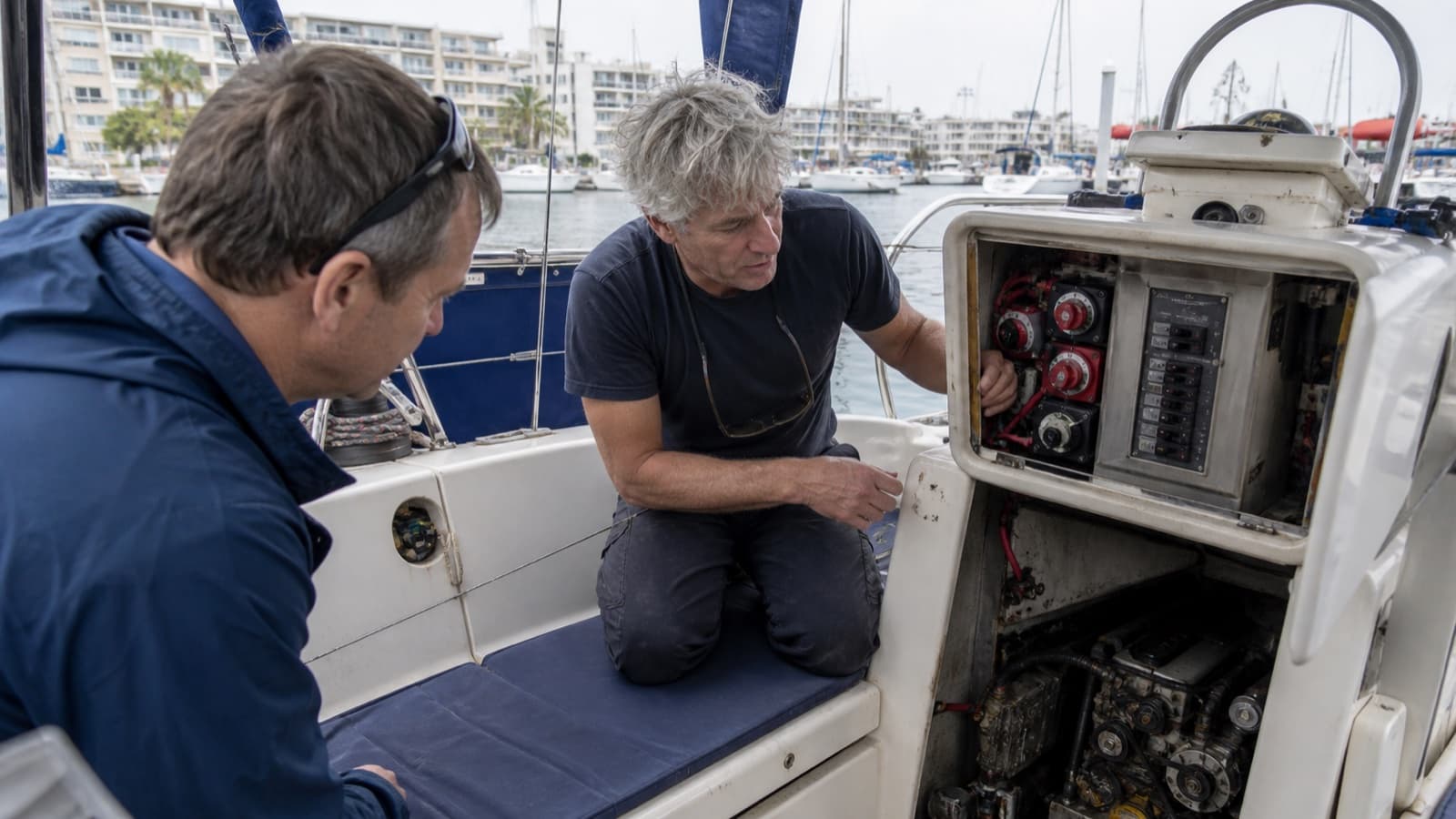
Start by learning the specific marina's rules and documenting the boat's true condition. Confirm engine identity, maintenance history, fuel, cooling, batteries, shore power, steering, bilge systems, and service access. Marina del Rey includes many separately operated facilities, so contractor and repair procedures should be verified at your berth.
Identify the boat and its home berth
Record engine and drive models, serial numbers, hours, battery configuration, fuel capacity, shore-power system, and major equipment. Separately record the marina operator, basin, dock, slip, office contact, gate procedure, parking rules, and contractor requirements. Marina del Rey is one harbor with many individual facilities, and the operator of your berth controls much of the daily process.
Read the slip agreement and current harbor regulations rather than relying on a neighbor's summary. Learn restrictions on dock storage, repair activity, discharge, noise, and vendor access. When a service visit is needed, confirm both the technician's entry requirements and whether the proposed work is allowed at the slip.
Turn uncertain history into a maintenance baseline
A prior owner's statement that the boat was recently serviced is not a complete record. Match invoices to the engine schedule and note missing dates, hours, part numbers, and measurements. Inspect fluids, filters, cooling, belts, hoses, clamps, anodes, batteries, charging, controls, exhaust, fuel, and bilge condition before assuming the next service is months away.
Prioritize active leaks, unsafe wiring, fuel odor, cooling concerns, steering faults, failed pumps, and degraded hoses. Then schedule routine items and record a new baseline. Replacing random parts without testing can be expensive and still leave the actual fault in place.
Understand saltwater slip storage
A boat that lives in the water needs frequent attention even when its engine hours are low. Salt air reaches electrical connections and machinery spaces, anodes are consumed, marine growth adds load, shore power remains connected, and small leaks can continue between visits. Check the boat in person or arrange appropriate oversight rather than assuming the dock is a neutral storage environment.
Inspect lines, fenders, bilge level, pumps, battery charging, shore-power connections, anodes, visible underwater growth, ventilation, and signs of water intrusion. Correct moisture sources early. Cleaning green corrosion without fixing the leak, failed seal, or cable routing only delays the same problem.
Choose the right service setting
A mobile mechanic may be appropriate for permitted, accessible diagnostics and maintenance involving engines, starting, charging, fuel, cooling, controls, and onboard mechanical systems. A boatyard is the correct setting for haul-out, underwater repairs, structural work, heavy lifting, major fabrication, and jobs that the marina does not allow in the slip.
A diver, electrician, electronics installer, rigger, surveyor, and detailer have different scopes. Ask each provider to define the work, rate, authorization limit, parts handling, verification method, and written closeout. Professional coordination is more useful than expecting one vendor to cover unrelated trades.
Learn normal operation close to home
Before a longer coastal trip, learn the boat locally with qualified instruction where needed. Observe cold starting, idle, shifting, steering, temperatures, charging voltage, cruise behavior, smoke, vibration, and shutdown. Practice battery-switch and seacock awareness without changing equipment you do not understand.
After each of the first trips, inspect the engine room and bilge. Look for new fluid, salt trails, loose hardware, hot terminals, belt dust, or filter changes. A healthy baseline makes later descriptions precise: instead of saying the engine feels wrong, you can report when, where, and under what load the change appears.
Keep a Marina del Rey ownership record
Store manuals, registrations, insurance, service invoices, inspection findings, marina contacts, and photographs in one place. Add the next service date and engine-hour threshold after every appointment. Record unresolved recommendations with priority and the evidence behind them.
Review the file before scheduling annual service, a Catalina trip, or a sale. Accurate records reduce repeated diagnosis, help a new technician understand the installation, and make it easier to distinguish normal aging from a developing local saltwater problem.