 Otter Marine
A Marina del Rey Boat Maintenance Calendar
A practical maintenance rhythm for boats kept in Marina del Rey, including monthly slip checks, engine-hour service, saltwater exposure, rain, and pre-trip preparation.
By Otter Marine Published August 13, 2026
The short answer
Use the engine manufacturer's schedule as the baseline, then add monthly checks for a slip-kept boat, annual time-based service, and condition-driven inspections after storms, storage, or heavy use. Marina del Rey's year-round saltwater environment makes corrosion, shore power, bilge condition, anodes, and moisture continuous concerns.
Build the schedule around a slip-kept boat
A Marina del Rey boat may accumulate few engine hours while remaining exposed to salt air, water, shore power, and changing weather every day. Time-based maintenance therefore matters as much as hours. Combine the exact propulsion schedule with recurring checks for bilge systems, batteries, shore power, corrosion, anodes, ventilation, lines, fenders, and water intrusion.
Keep the calendar with the service log and record actual completion. A reminder marked done without parts, hours, observations, or an invoice is not a useful history. When the boat changes owners or technicians, clear records prevent both missed work and unnecessary repetition.
Monthly: inspect the boat even when it has not moved
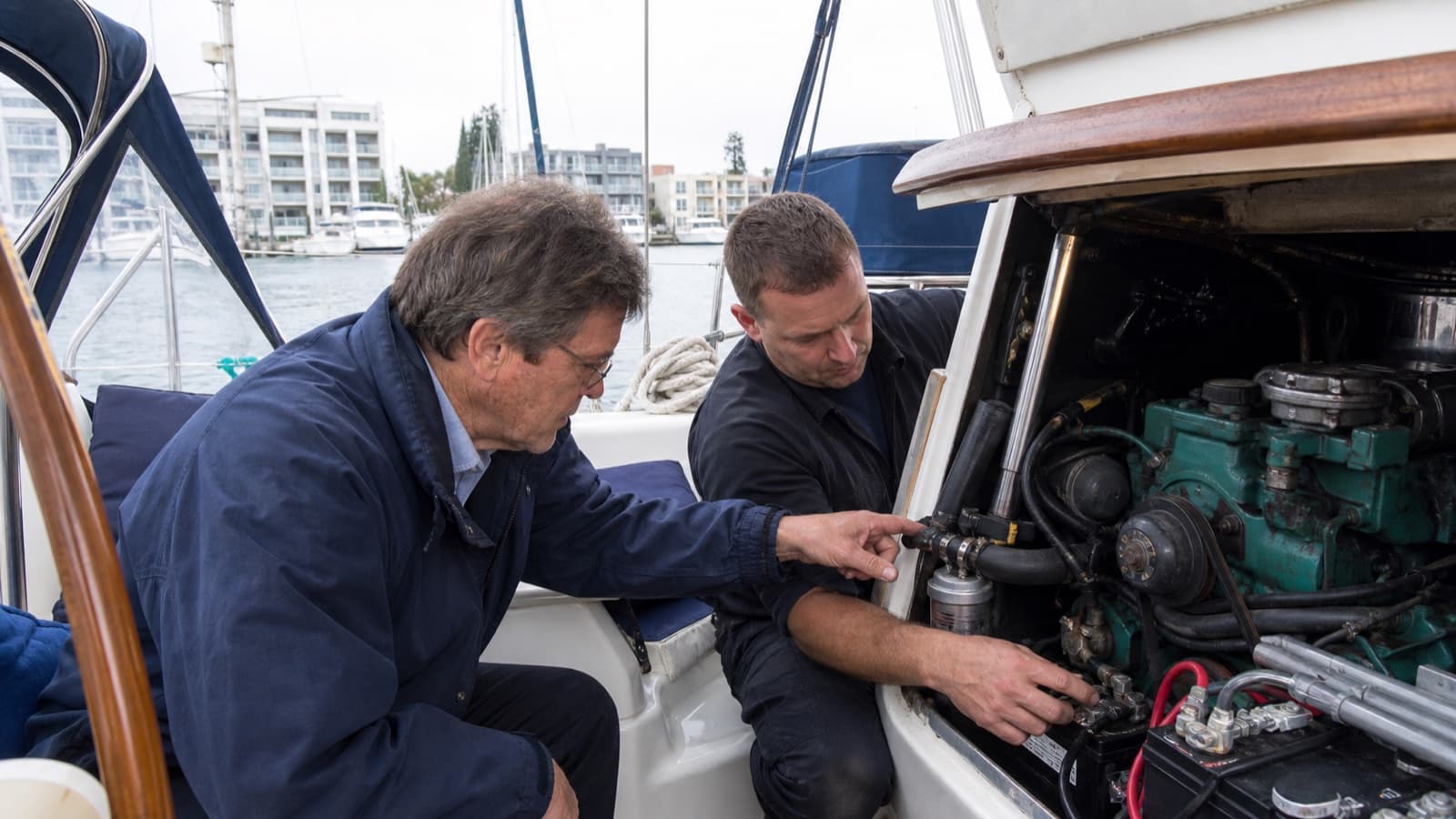
Check the bilge, pumps, batteries, charger, shore-power cord and inlet, dock lines, fenders, covers, drains, and signs of birds or water intrusion. In the engine space, look for new fluid, salt crystals, corrosion, loose clamps, belt dust, fuel odor, and changes around exhaust or cooling hoses.
Inspect visible anodes and underwater growth from a safe position and coordinate qualified underwater service as needed. A fouled hull or propeller increases load and can make a healthy engine appear weak. Do not diagnose an RPM or speed problem without considering the condition below the waterline.
- Bilge, pumps, and water intrusion
- Shore power, batteries, and charger
- Dock security and ventilation
- Corrosion, anodes, and visible growth
Before periods of heavier use
Reconcile engine hours with oil, filters, fuel-system items, cooling pumps, belts, hoses, ignition, valve or drive service, and every model-specific requirement. Inspect steering, controls, charging, navigation lights, VHF, and safety equipment. Resolve alarms and intermittent faults before relying on the boat farther from the harbor.
Complete a local sea trial under normal load. Watch temperature, voltage, oil pressure where shown, RPM, speed, smoke, vibration, and steering. An engine that behaves normally at idle may still have a restricted fuel path, weak ignition component, cooling limitation, or propeller problem under demand.
After high-hour months or a Catalina trip
Update engine hours immediately and inspect fluids, filters, belts, strainers, battery security, hose clamps, bilge condition, and any spares used. Wash down and flush only according to the boat and engine instructions, avoiding high-pressure water around connectors and vents.
Record any momentary alarm, hard start, unusual smoke, vibration, temperature change, electronics reset, or need to use a backup system. A symptom that cleared after shutdown still belongs in the log. Heat-sensitive and demand-related faults often disappear at the slip.
Before and after winter rain
Inspect covers, cockpit drains, hatches, ports, bilge pumps, float switches, charger operation, and shore-power connections before a wet period. After rain, check the boat directly for new water paths. Water can travel along wiring and structures before appearing far from the original leak.
Do not allow repeated moisture to reach batteries, fuse blocks, engine harnesses, chargers, or shore-power equipment. Drying the area is temporary; locate and correct the entry path. Treat a warm, discolored, wet, or arcing electrical connection as unsafe and disconnect power only if that can be done safely.
Annual review and marina coordination
Once each year, compare the completed log with every manufacturer schedule and vessel system. Prioritize safety issues, active leaks, items that threaten engine damage, due maintenance, and condition items to monitor. Budget for the next longer-interval components rather than discovering all of them during a single urgent visit.
Confirm current contractor and repair procedures with the individual marina before scheduling work. Marina del Rey rules and operator policies can change. Advance coordination protects the dock, the technician's time, and the owner's schedule.