 Otter Marine
What Long Beach Boat Owners Should Check After a Boat Has Been Sitting
A recommissioning checklist for fuel, batteries, cooling, lubrication, steering, bilge systems, and the first controlled run after storage in Long Beach.
By Otter Marine Published August 13, 2026
The short answer
Inspect before starting. Determine how long the boat sat and why, check fuel condition, fluids, batteries, wiring, cooling-water supply, belts, hoses, steering, controls, bilge systems, and visible corrosion. Then use a controlled start and local test rather than making the first run a longer trip.
Define what sitting means for this boat
A few quiet weeks and several unattended seasons are different situations. Record the last successful run, fuel age, battery charging, storage conditions, prior symptoms, known leaks, and why the boat stopped being used. If it was laid up because of an overheat, alarm, impact, or no-start, that fault remains the first concern.
Inspect the boat before applying power or turning the key. Look for fuel odor, water in the bilge, damaged batteries, animal nesting, loose wiring, missing drain plugs on trailerable boats, seized controls, degraded hoses, and corrosion. Stop when a condition is unsafe or unfamiliar.
Evaluate batteries and the electrical path
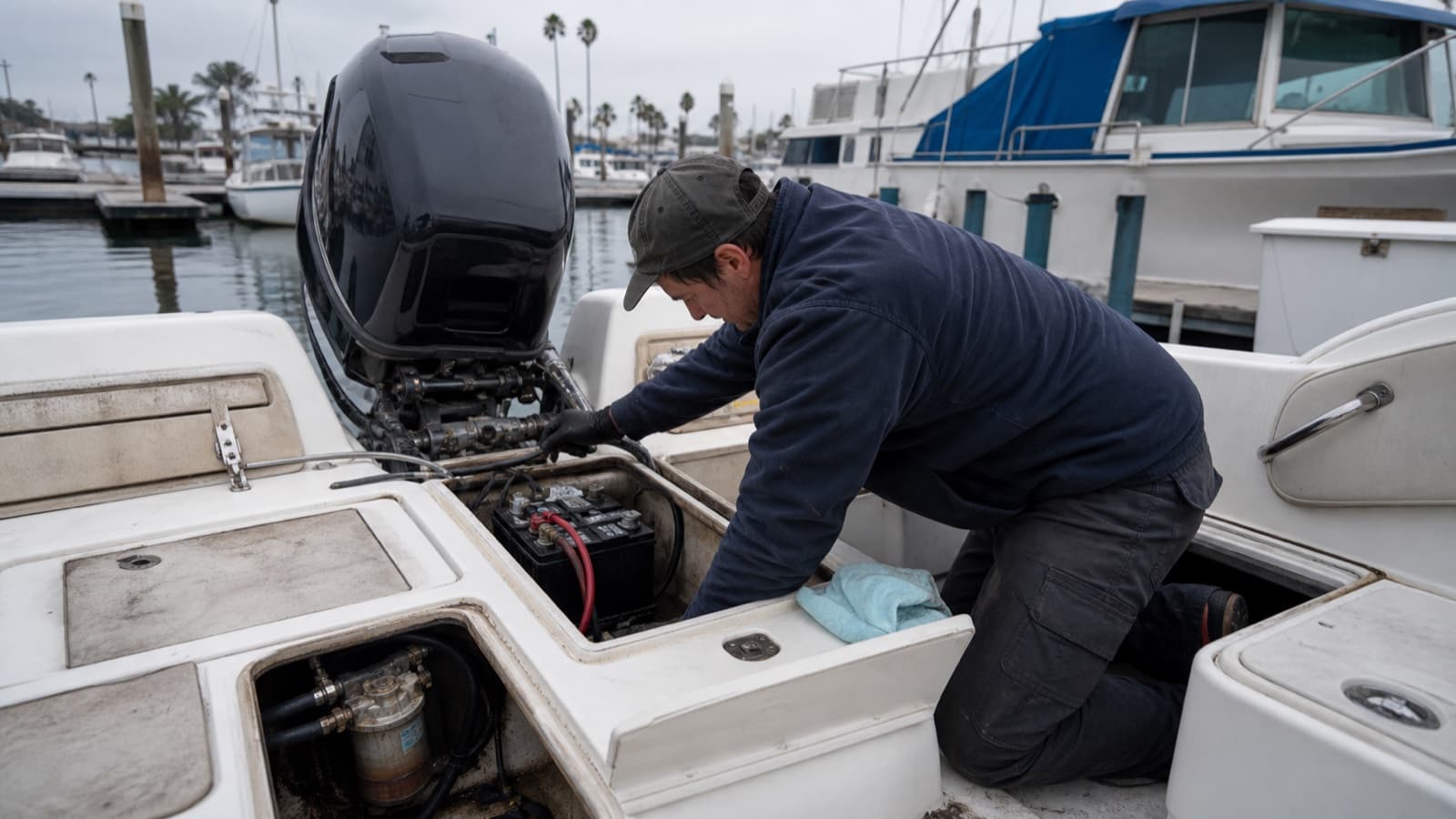
Check battery cases, age, electrolyte where serviceable, restraints, terminals, grounds, switches, fuses, and charger status. Charge according to the battery and charger instructions, then test capacity or starting performance appropriately. Resting voltage alone does not prove the battery can support cranking.
Inspect shore-power equipment and 12-volt distribution for heat, corrosion, water, or improvised connections. Confirm bilge pumps and essential circuits before starting the engine. Never install a larger fuse or bypass a breaker to bring a dormant circuit back to life.
Treat old fuel as an unknown
Fuel can oxidize, absorb or accumulate water, support contamination, and leave deposits. Inspect the tank and sample or service the fuel by an appropriate method when age or condition is uncertain. Check fills, vents, hoses, valves, primer components, filters, and separators for leakage, restriction, or deterioration.
Adding fresh fuel does not remove water or sludge at the bottom of a tank. Replacing a filter without addressing contaminated supply may produce a short period of normal operation followed by another restriction. Dispose of fuel and contaminated material through approved channels.
- Confirm fuel age and source
- Inspect filters and separators
- Check vents and hose condition
- Stop immediately for leaks or strong odor
Inspect lubrication and cooling before cranking
Check engine oil, gear lubricant where accessible, coolant, belts, hoses, clamps, sea strainers, seacock position, cooling intakes, raw-water pump history, and evidence of previous leaks. Follow the exact engine procedure for pre-start inspection and any recommended steps after extended storage.
Rubber impellers can take a set or deteriorate with age, and debris can block an intake while the boat sits. Never run a water pump dry. If the cooling history is unknown or a prior overheat occurred, inspect the system before relying on telltale flow alone.
Make the first start controlled and observable
Ventilate as required, provide correct cooling water, keep extinguishing equipment available, and have one person observe the engine while another controls it. Watch oil pressure, temperature, charging voltage, cooling flow, smoke, vibration, leaks, and abnormal sound. Shut down promptly if a warning or unsafe condition appears.
Do not rev a cold engine or continue running to see whether a serious noise clears. After shutdown, recheck fluids, bilge, belts, hoses, filters, and terminals. A first start is an inspection step, not proof that the boat is ready for open water.
Finish with a local verification run
When dockside checks are normal, test steering, controls, shifting, and essential electronics, then conduct a conservative local run. Increase load gradually while monitoring RPM, speed, temperature, voltage, vibration, and alarms. Stay close enough to return safely if a dormant problem appears.
Inspect again at the slip and update the maintenance record. Complete any overdue time-based service and resolve new findings before a Catalina trip or other demanding use. The objective is not merely to start the engine; it is to restore a known, tested operating baseline.