 Otter Marine
Preparing Your Boat for a Catalina Trip from Long Beach
A practical mechanical, fuel, electrical, cooling, and safety-preparation guide for Long Beach boaters planning an offshore Catalina trip.
By Otter Marine Published August 13, 2026
The short answer
Treat a Catalina trip as sustained offshore operation, not a longer harbor cruise. Resolve engine symptoms before departure, verify fuel range with a reserve, inspect cooling and electrical systems, test communications and safety equipment, and complete a local sea trial under normal load. Use current official forecasts and be willing to postpone.
Start with the boat, not the departure date
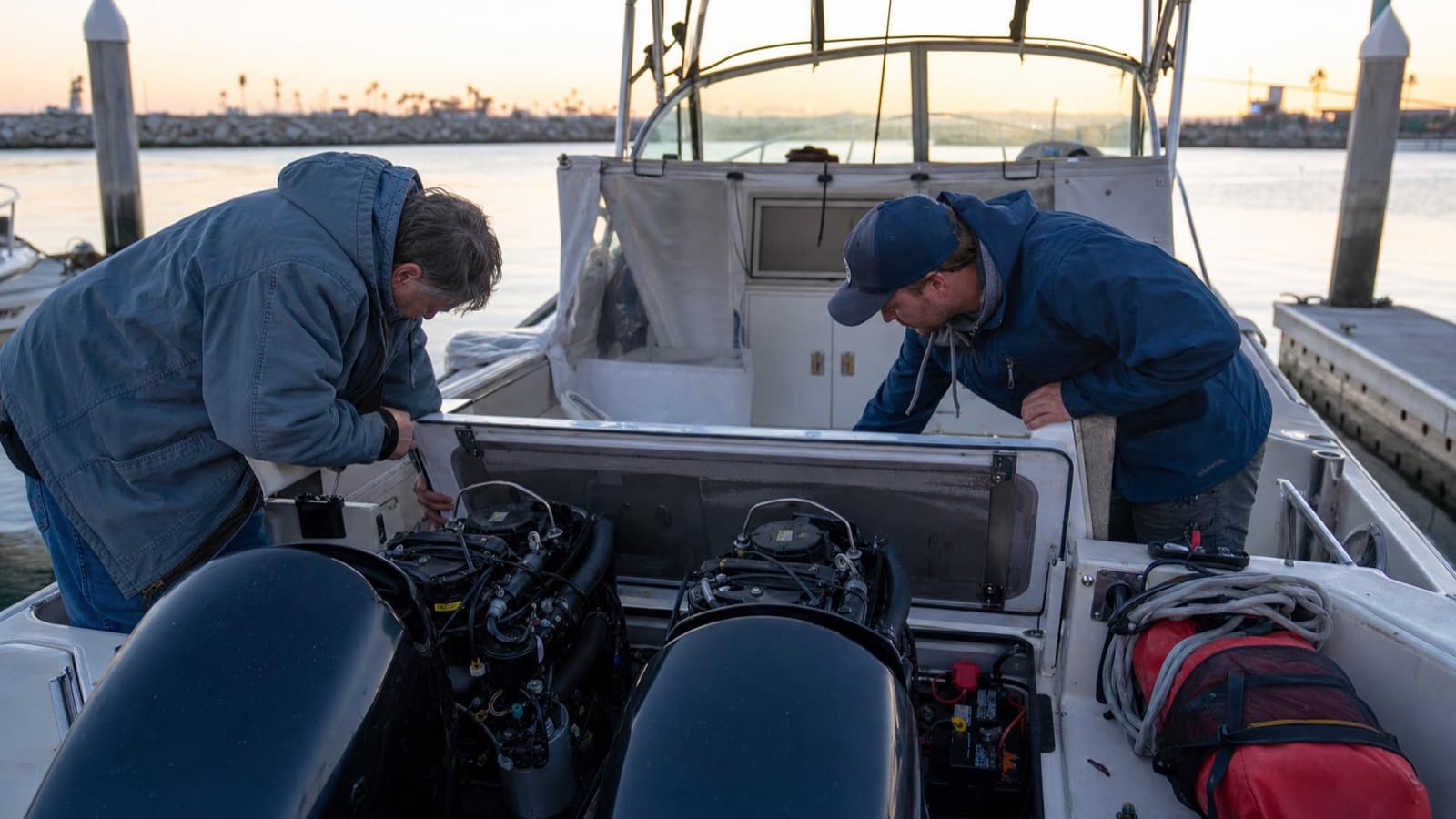
A calendar reservation, favorable forecast, or group plan should not pressure an owner into taking a mechanically uncertain boat offshore. Begin several weeks ahead by reviewing engine hours, time-based maintenance, recent alarms, fluid loss, charging behavior, fuel age, and any change in starting or power. Intermittent faults deserve diagnosis because sustained load and vibration can make them more consistent away from the harbor.
Gather the engine manuals, service records, model and serial numbers, and a realistic list of deferred items. Separate cosmetic work from systems that affect propulsion, steering, cooling, fuel, electrical power, bilge control, navigation, and communication. Give safety-critical findings enough time for parts, repair, and a verification run.
Establish fuel range with a reserve
Calculate fuel from the boat's demonstrated consumption, expected speed, actual tank capacity, and a conservative reserve. Do not base the plan only on a gauge that has never been checked against fuel added. Sea state, current, load, hull growth, trim, and detours can increase consumption, while old fuel or water in the system can create a problem before the tank is empty.
Inspect fills, vents, hoses, primer bulbs where used, filters, and accessible tanks for leakage or deterioration. Drain or inspect fuel-water separators according to the engine procedure and carry approved spares if the operator knows how to install them safely. Never move contaminated fuel or oily water into the harbor.
- Use measured consumption when available
- Include a meaningful reserve
- Know which tank and valve positions feed each engine
- Resolve fuel odor or contamination before departure
Cooling and lubrication must be ready for sustained load
Check engine oil, gear lubricant where accessible, coolant on closed-cooled engines, belts, hoses, clamps, sea strainers, raw-water pumps, intakes, and the recent impeller history. A telltale alone does not prove that an outboard's entire cooling system is clear. Know the boat's normal temperature and water-pressure behavior before relying on it offshore.
Look for dried coolant, salt trails, belt dust, soft hose ends, loose clamps, and oil-level changes. If an engine recently overheated, identify the cause and verify the repair under load. A brief idle at the slip is not an adequate closeout for a problem that originally appeared at cruise RPM.
Test batteries, charging, steering, and controls
A battery can show acceptable voltage at rest and still fail under starting load. Confirm battery capacity, clean and secure cable connections, charging output, and the operation of bank switches or isolators. Test navigation electronics during engine starting; resets can reveal voltage drop or poor circuit separation.
Move steering and controls through their normal range while secured and according to the manufacturer's procedure. Inspect hydraulic fluid, visible hoses, linkages, tie bars, and mounting hardware. On a twin-engine boat, understand how the vessel handles if one engine is unavailable without creating that scenario in unsafe conditions.
Complete a local shakedown run
Run the boat locally with the normal people, fuel, water, and gear aboard. Bring the engines to their usual operating range while monitoring temperature, voltage, oil pressure where displayed, steering feel, vibration, RPM, and speed. Confirm that the engines can achieve the manufacturer's specified operating range without an alarm or power loss.
Return to the slip and inspect for leaks, loose hardware, belt dust, fluid level changes, and unusual heat or odor. A successful sea trial is more persuasive than a successful start. If the trip will involve nighttime operation, separately verify navigation lights and the readability of instruments after dark.
Weather, communications, and the decision to go
Check the latest marine forecast, observed conditions, notices, and local harbor information from official sources. Conditions outside the Long Beach breakwater can differ sharply from the protected water inside. Plan the route and alternates with someone qualified to operate the vessel, and file or share a float plan with a responsible person ashore.
Test VHF radio operation, verify required safety equipment, and carry appropriate backups for navigation and power. This maintenance guide is not a navigation plan; the operator remains responsible for route, weather, crew, and regulatory decisions. Postponing because a system or forecast is uncertain is good seamanship, not a failed trip.