 Otter Marine
Boat Engine Cranks but Won't Start: Fuel, Spark, or Compression?
A diagnostic overview of what an engine needs to run and why testing should come before replacement parts.
By Otter Marine Published August 12, 2026
The short answer
If the engine cranks at the correct speed but will not run, the diagnostic path usually turns to fuel delivery, ignition, compression, timing, and the electronic inputs that authorize operation. Cranking alone does not prove the battery or starting circuit is healthy enough.
Begin with the conditions for combustion
The engine needs the correct air-fuel mixture, a properly timed ignition source on gasoline engines, adequate compression, and sufficient cranking speed. Modern control modules also rely on safety circuits, sensors, and stable voltage.
Avoid the parts-cannon approach
Fresh spark plugs cannot correct low fuel pressure, and a new battery will not repair a corroded ground or failed sensor. The efficient path is to confirm what is missing with appropriate tests, then trace that system to the cause.
- Verify battery condition and cranking speed
- Confirm correct fuel and delivery pressure
- Test ignition safely with approved equipment
- Check fault codes and live data where supported
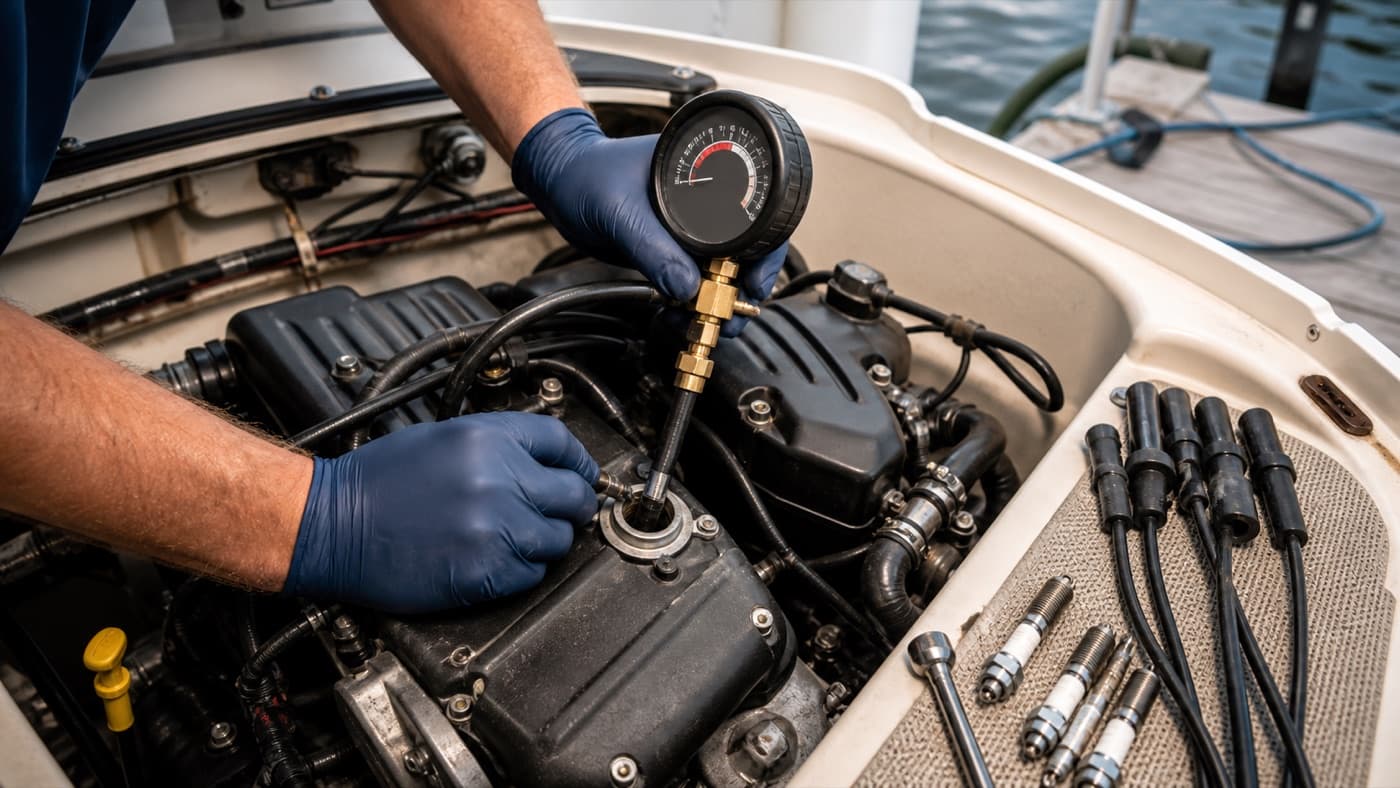
- Use compression or leak-down testing when indicated
Information that saves diagnostic time
Bring the model and serial number, fuel age, recent work, alarm history, and a description of exactly when the failure began. Mention whether the engine was recently run dry, overheated, submerged, stored, refueled, or serviced.
Separate a fuel problem from an ignition problem safely
The correct tests depend on whether the engine is gasoline or diesel, carbureted or fuel injected, and mechanically or electronically controlled. Fuel pressure, injector command, ignition output, sensor data, and compression must be checked with methods specified for that engine.
Avoid spraying unapproved starting fluid, bypassing safety circuits, or testing spark near fuel vapors. If flooding, leaking fuel, damaged wiring, or a hot connection is present, ventilate the space and stop. A disciplined test sequence is faster and safer than substituting parts.
- Identify the exact engine before testing
- Confirm stable cranking voltage
- Use approved spark and fuel-pressure tools
- Test compression when the basic systems are present