 Otter Marine
What Does a 100-Hour Boat Engine Service Include?
What owners can expect at a 100-hour service and why the engine manual—not a generic package—sets the final scope.
By Otter Marine Published August 12, 2026
The short answer
A 100-hour service usually combines fluid and filter changes with inspections of the fuel, cooling, ignition, steering, propeller, anodes, and mounting systems. Exact requirements vary by manufacturer, model, age, and operating conditions.
The common service items
Most four-stroke outboard and marine-engine schedules call for several of the following tasks at 100 hours or annually, whichever arrives first. Diesel, gasoline inboard, sterndrive, and two-stroke schedules differ.
- Engine oil and filter where applicable
- Fuel filters and water-separating filter
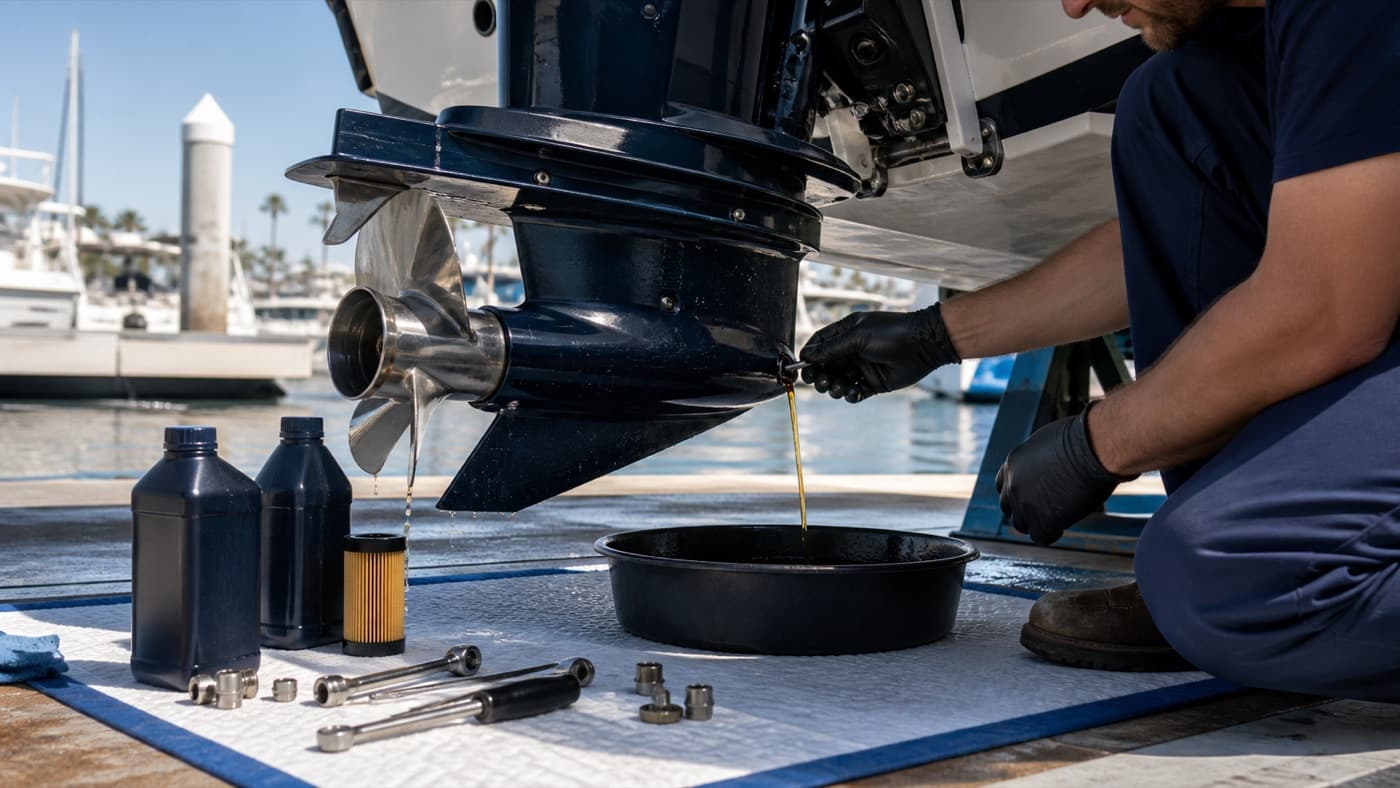
- Gearcase or drive lubricant
- Spark-plug inspection on gasoline engines
- Lubrication of specified fittings and linkages
- Propeller, anode, steering, belt, hose, and mounting inspection
Inspection is as important as replacement
A useful service is not just an oil change with a larger name. The technician should look for water in gear lubricant, metal on drain-plug magnets, deteriorated fuel hose, loose electrical connections, corrosion, fishing line behind the propeller, abnormal belt wear, and cooling-system concerns.
Those observations help identify work that is due now, work that can be planned, and items that are still serviceable.
Bring the engine information
Provide the full model and serial number, current engine hours, previous records, recent symptoms, and how the boat is used. Confirm the scope and parts before work starts, then keep the completed checklist and invoice with the vessel's maintenance history.
How to prepare for the appointment
Send the engine model, serial number, current hours, and prior service record before the visit so the correct schedule and parts can be confirmed. Mention any oil consumption, alarms, hard starting, unusual smoke, vibration, or performance change rather than treating the appointment as fluids only.
Make the engine and service points accessible, arrange marina access, and verify whether the boat can be run at the dock. Afterward, keep the invoice and checklist with the vessel records and note the next date and hour threshold.
- Confirm engine identity and hours
- Review previous service
- Report symptoms before work begins
- Record completed items and the next interval