 Otter Marine
Where Should You Take a Boat for Repairs in Los Angeles County?
How to choose between a mobile mechanic, boatyard, diver, electrician, surveyor, or specialist for a boat in coastal Los Angeles County.
By Otter Marine Published August 13, 2026
The short answer
Choose the provider and location from the system at fault, required access, safety controls, marina rules, and how the repair will be verified. Mobile mechanics fit many accessible engine jobs; yards handle haul-out and heavy work; divers, electricians, riggers, electronics technicians, and surveyors cover distinct scopes.
Start by defining the symptom
The fastest way to choose a facility is to describe what the boat does, not to name a part you suspect. A no-start, overheating alarm, loss of power, steering problem, vibration, dead circuit, water intrusion, or hull damage points toward different tests and access. Include propulsion type, engine model, boat location, and whether the issue appears at the dock or only underway.
When the system is uncertain, begin with diagnosis rather than calling multiple specialists to replace likely components. A useful diagnostic visit should identify what has been confirmed, what remains untested, and whether the repair can proceed at the berth or needs another setting.
Use a mobile marine mechanic for accessible propulsion work
Mobile service is well suited to many engine, starting, charging, fuel, cooling, control, and routine maintenance jobs when the marina permits them. Working at the boat lets the technician see the real installation, cable lengths, fuel routing, ventilation, control system, and symptom in its normal environment.
The limits are access, safety, weather, marina policy, component weight, containment, and testing. A mobile provider should say when those limits make the job inefficient or unsafe rather than attempting shop-level work on a narrow dock.
Use a boatyard when the boat or component must be lifted
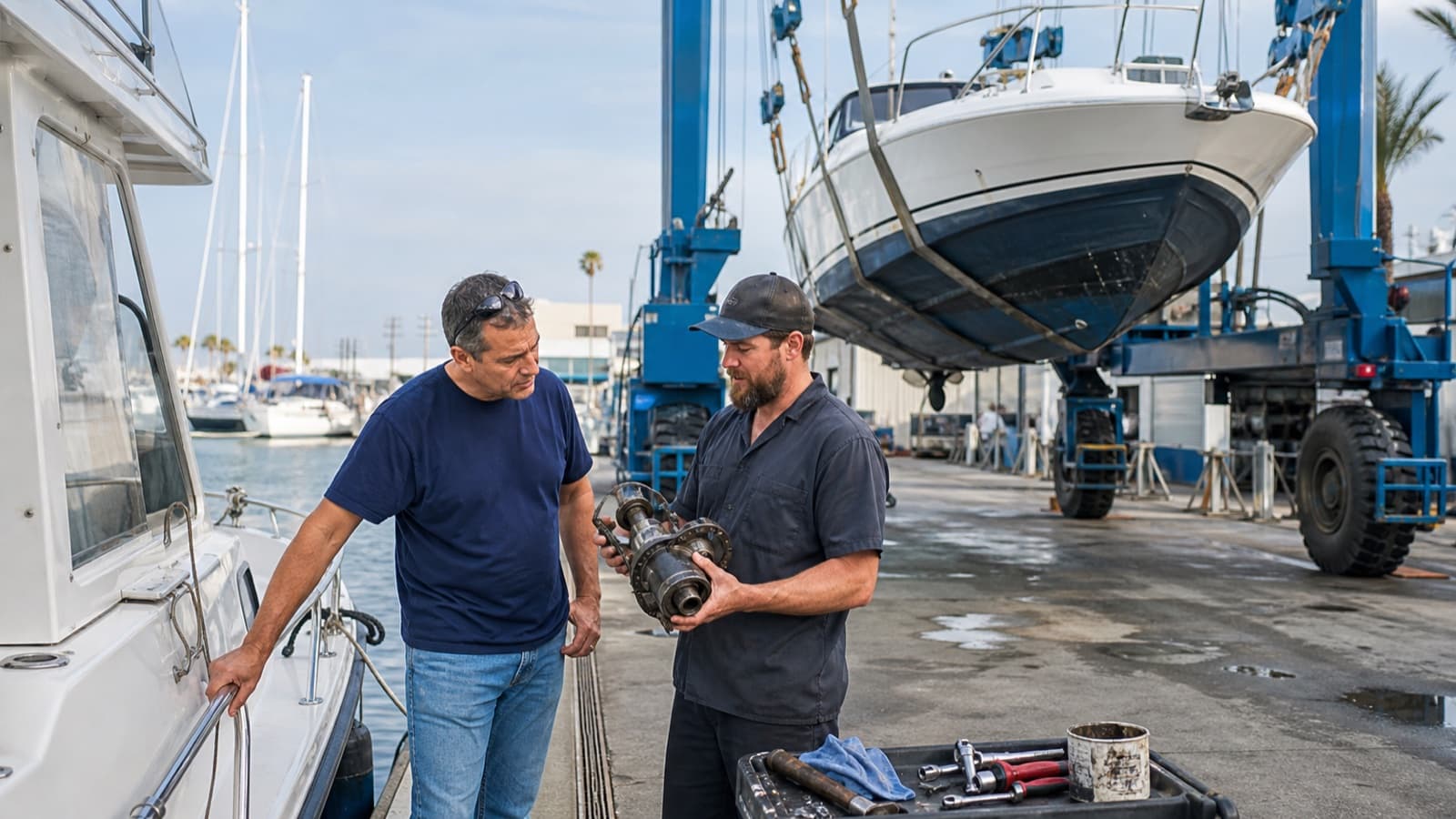
A yard is the natural choice for haul-out, bottom work, underwater gear, through-hulls, major sterndrive service, shaft and propeller work, structural repair, fabrication, coatings, and components that require a crane, press, bench, or controlled shop environment. Some yards coordinate several trades, while others expect owners to bring specialists.
Ask about haul-out capability, maximum dimensions and weight, lay-day or storage charges, environmental rules, outside-contractor policy, and how sea-trial or launch verification is handled. The cheapest haul-out quote may not include the access or trade needed for the actual repair.
Use specialists for specialist systems
Divers inspect and service underwater components within their permitted scope. Marine electricians diagnose distribution, batteries, charging, bonding, and wiring. Electronics technicians focus on navigation and communication equipment. Riggers handle spars and standing or running rigging. Surveyors provide defined condition or valuation inspections rather than ordinary repair.
Engine mechanics may troubleshoot related electrical and fuel systems, but that does not make every AC shore-power fault, navigation-network issue, hull problem, or rigging concern an engine job. Ask where the provider's responsibility ends and how they coordinate another trade when findings cross systems.
- Match the trade to the failed system
- Confirm licensing or credentials where applicable
- Define who owns the diagnosis
- Require approval before the scope expands
Consider local marina rules and travel
Long Beach and Marina del Rey have different government and marina-operator requirements for vendors. Confirm that the chosen provider can legally enter the facility and perform the planned work. Parking, gate access, dock distance, work hours, fluid rules, and permission to run engines can materially affect the estimate.
A provider farther away may be the right choice for a specialized engine, but travel and repeat visits should be clear. For ordinary service, local familiarity can reduce access delays and help the technician know when a particular task is better moved to a yard.
Evaluate the repair plan, not only the hourly rate
Ask what the initial authorization covers, which tests will be performed, how parts and outside services are billed, what minimum or travel charge applies, and how additional work is approved. Confirm the final verification: dock run, load test, sea trial, leak check, scan, measurement, or another appropriate method.
The closeout should state the complaint, fault found, work completed, parts used, results, remaining recommendations, and operating instructions. That record protects continuity if the boat moves from mobile diagnosis to a yard or from one specialist to another.