 Otter Marine
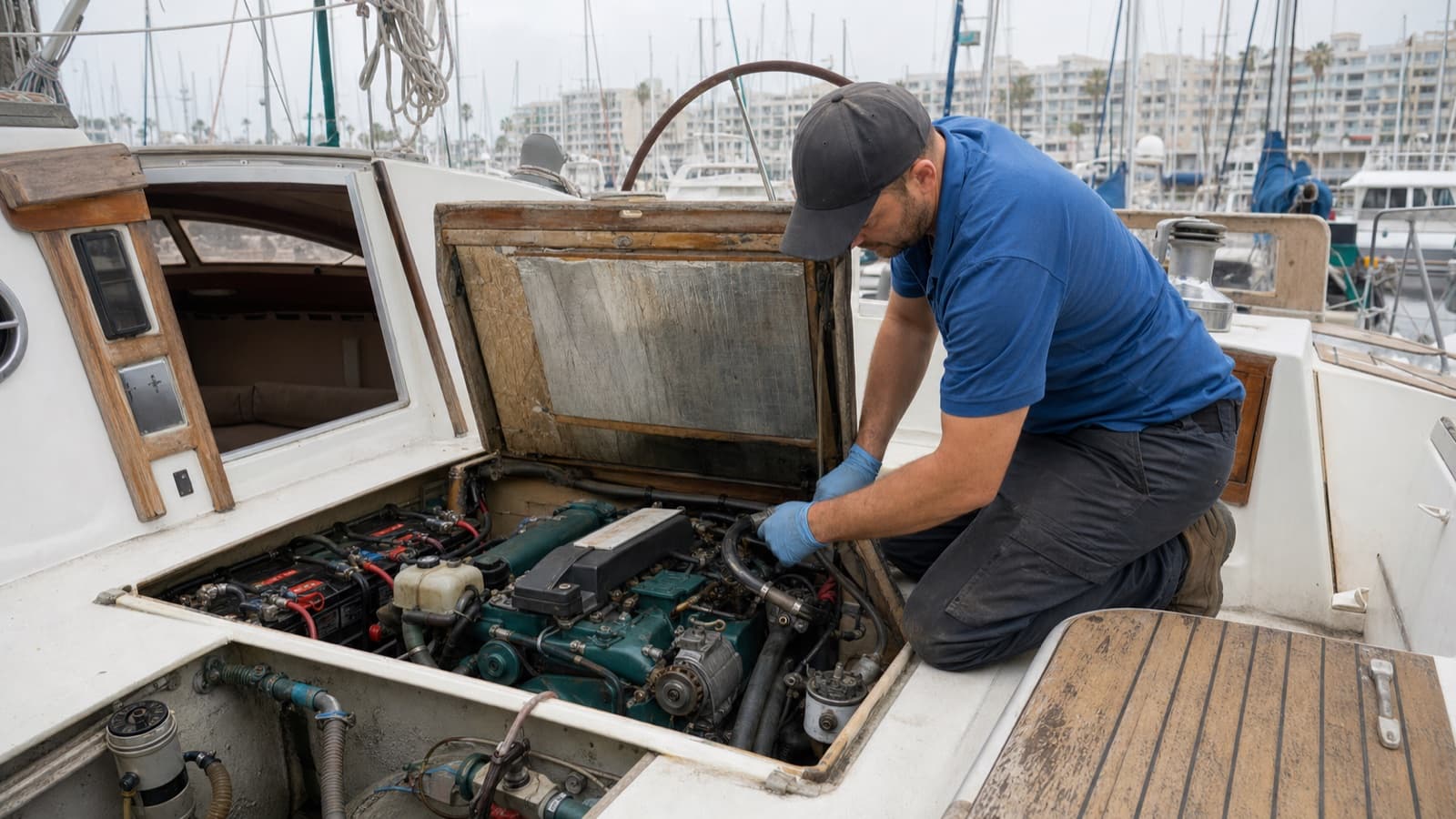
What Marina del Rey Owners Should Check After Extended Boat Storage
How to recommission a Marina del Rey boat after extended storage without turning the first engine start into the first full systems test.
By Otter Marine Published August 13, 2026
The short answer
Inspect the entire operating chain before starting: fuel, batteries, charging, lubrication, cooling-water supply, belts, hoses, steering, controls, bilge pumps, shore power, corrosion, and underwater condition. Follow the engine's storage procedure and verify the boat locally under load before planning a longer coastal trip.
Start with the storage history
Determine when the boat last ran normally, whether it was intentionally laid up, which storage steps were completed, how batteries were maintained, how old the fuel is, and whether anyone inspected the boat between visits. An unknown history should lead to more inspection, not a more aggressive starting attempt.
Look through the vessel before switching on power. Check bilge level, fuel odor, shore-power condition, battery cases, loose cables, water intrusion, corrosion, seized controls, damaged hoses, exhaust components, sea strainers, and evidence of animals or debris. Address unsafe conditions first.
Inspect shore power, batteries, and critical circuits
A connected charger does not guarantee healthy batteries. Inspect the cord, inlet, breakers, charger indications, battery restraints, terminals, grounds, switches, and cable condition. Charge with the correct equipment and test capacity or cranking performance according to the battery type.
Verify automatic bilge pumps, alarms, blower systems where required, and essential navigation or communication circuits. If a fuse opens or breaker trips again, stop and diagnose the fault. Never bypass protection to force dormant equipment to operate.
Check fuel before asking the engine to use it
Inspect fills, vents, tanks where accessible, valves, hoses, primer systems, filters, separators, and the bilge. Old gasoline and diesel can create different problems, but neither should be judged only by appearance at the fill. Use an appropriate sampling or service method when age, water, or contamination is uncertain.
Fresh fuel added on top does not remove settled water or debris. A contaminated tank can repeatedly load new filters and create power loss only after demand increases. Handle and dispose of fuel, filters, and oily material under applicable environmental rules.
Restore cooling and lubrication readiness
Check oil, coolant, gear or transmission fluid where applicable, belts, hoses, clamps, sea strainers, seacocks, raw-water pump history, heat exchangers, exhaust hose condition, and visible leaks. Follow the engine manufacturer's recommissioning procedure, including any steps for cylinders, fogging oil, or fuel systems.
Impellers and seals age while stationary, and marine growth can restrict intakes. Never run the pump dry or assume a visible telltale proves complete circulation. If the service history is incomplete, inspect the pump and cooling path before sustained operation.
- Verify every required seacock position
- Inspect strainers and intakes
- Confirm fluid level and condition
- Resolve salt trails and dried coolant before testing
Control the first start
Ventilate, provide cooling water exactly as required, keep the boat secured, and arrange clear communication between the controls and engine space. Watch oil pressure, cooling flow, temperature, charging voltage, smoke, leaks, vibration, and sound. Shut down rather than waiting through an alarm or mechanical knock.
After the engine reaches the permitted test condition, stop and inspect again. Check fluids, filters, belts, hose ends, clamps, battery cables, exhaust, and bilge. Heat and pressure can reveal a leak that was invisible during the static inspection.
Verify locally before leaving Marina del Rey
Test steering, controls, shifting, pumps, charging, electronics, and alarms before leaving the berth. Then complete a conservative local run under normal load, monitoring RPM, speed, temperature, voltage, vibration, and engine data. A dormant fault may not appear until heat and fuel demand increase.
Return, inspect, and document the new baseline. Complete overdue time-based maintenance and resolve findings before a Catalina crossing or extended coastal run. Confirm current marina procedures before bringing a contractor to the slip, especially if the work expands beyond inspection or minor service.